

Introduction
Not all cotton socks are the same. You have probably bought a pack of socks that felt fine on day one, but after a few washes they stretched out, faded, or lost their shape. That is not a cotton problem. That is a quality problem.
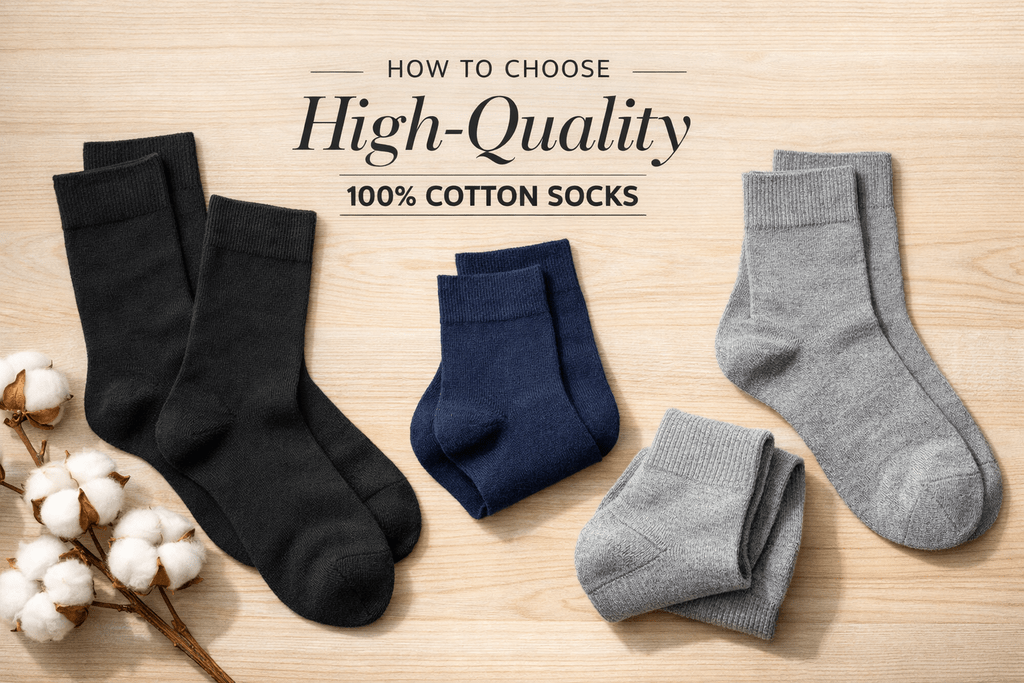
Choosing high-quality 100% cotton socks means knowing what to look for before you buy. The right pair will keep your feet comfortable, dry, and fresh all day long. The wrong pair will cost you more in the long run because you will keep replacing them.
This buyer’s guide covers everything you need to know to make a smart choice, from the type of cotton used to the way the sock is constructed, so you never waste money on poor-quality socks again.
Why 100% Cotton Socks?
Cotton is one of the most popular sock materials in the world, and for good reason. It is natural, breathable, soft, and generally well-tolerated by most skin types. But the words ‘100% cotton’ on a label do not automatically mean you are getting a quality product.
The quality of a cotton sock depends on several factors including the type of cotton, the thread count, the knitting method, and the finishing process. Understanding these factors will help you separate the genuinely good socks from the ones that just look good on the shelf.
Types of Cotton Used in Socks
The first thing to check when buying cotton socks is the type of cotton used. Not all cotton is equal, and the variety matters a lot for softness, durability, and breathability.
1. Egyptian Cotton
Egyptian cotton is considered the gold standard in textile production. It has extra-long fibers, called long-staple fibers, which produce a smoother, stronger, and more durable thread. Socks made from Egyptian cotton feel noticeably softer and last significantly longer than those made from standard cotton.
2. Pima Cotton
Pima cotton, sometimes sold under the brand name Supima, is another premium option. Like Egyptian cotton, it has long-staple fibers that result in a soft, lustrous fabric. It is slightly more affordable than Egyptian cotton while still offering excellent quality.
3. Mercerized Cotton
Mercerization is a finishing process that treats cotton with a chemical solution to strengthen the fibers, increase color retention, and give the fabric a subtle sheen. Mercerized cotton socks are more resistant to fading, pilling, and stretching. Pournara, for example, uses mercerized cotton in many of its sock lines precisely because of these durability advantages.
4. Standard Cotton
Standard or combed cotton is the most common type used in everyday socks. Combing removes short fibers and impurities, resulting in a cleaner and slightly softer yarn than raw cotton. While not as premium as Egyptian or Pima cotton, well-made combed cotton socks can still offer great value.
The Comparison: Cotton Types at a Glance
|
Cotton Type |
Softness |
Durability |
Best For |
|
Egyptian Cotton |
Very High |
Excellent |
Luxury, everyday wear |
|
Pima Cotton |
High |
Very Good |
Everyday comfort |
|
Mercerized Cotton |
High |
Excellent |
Long-lasting dress socks |
|
Combed Cotton |
Medium-High |
Good |
Casual, budget-friendly |
|
Standard Cotton |
Medium |
Fair |
Basic everyday use |
What to Look for When Buying Cotton Socks
1. Thread Count and Needle Count
The needle count refers to how many needles are used per inch in the knitting machine. A higher needle count means a finer, smoother, and more durable fabric. Look for socks knitted on 200-needle machines or higher for the best quality. Lower needle counts produce a thicker, rougher fabric that wears out faster.
2. Seamless or Flat-Seam Construction
The toe seam is one of the most common sources of sock discomfort. Cheap socks have thick, rough seams that rub against your toes all day. Quality cotton socks are either completely seamless or use a flat-seam construction that lies flush against the skin without any rubbing.
If you have sensitive skin or spend long hours on your feet, seamless construction is something you should prioritize.
3. Elastic and Cuff Quality
The cuff of a sock should hold its shape without cutting into your leg or slipping down during the day. Poor quality socks use cheap elastic that either grips too tight or loses its elasticity after a few washes. Look for socks with a reinforced cuff that uses quality spandex or lycra blended into the cotton for gentle but lasting hold.
4. Reinforced Heel and Toe
The heel and toe are the areas that take the most wear. High-quality cotton socks reinforce these areas with extra layers of cotton or a durable blended fiber. This reinforcement significantly extends the life of the sock and prevents holes from forming in the most common wear points.
5. Weight and Thickness
Cotton socks come in different weights, from lightweight dress socks to thick cushioned sport socks. The right weight depends on how you plan to wear them.
- Lightweight cotton socks work well for dress shoes and formal occasions
- Medium weight socks are ideal for everyday casual wear
- Heavyweight or cushioned socks suit sports, hiking, and cold weather
6. Colorfastness
Poor quality cotton socks bleed color in the wash or fade quickly after a few uses. Quality socks use colorfast dyes that retain their shade wash after wash. Mercerized cotton is particularly good at holding color due to the mercerization process which opens the fiber to better absorb dye.
What to Avoid When Buying Cotton Socks
- Avoid socks labeled “cotton blend” if you want the benefits of pure cotton. Blends with high percentages of polyester reduce breathability.
- Avoid very cheap multipacks where the low price usually means low needle count, rough seams, and poor elastic quality.
- Avoid socks without care labels because responsible manufacturers always include washing instructions.
- Avoid socks that feel stiff out of the packet as quality cotton should feel soft immediately without needing breaking in.
How to Care for 100% Cotton Socks
- Wash at 40 degrees Celsius or lower to preserve fiber strength
- Turn socks inside out before washing to protect the outer surface
- Avoid tumble drying on high heat as this shrinks and weakens cotton fibers
- Do not use bleach as it breaks down cotton over time
- Air dry when possible to extend the lifespan of the socks
Frequently Asked Questions
Are 100% cotton socks better than blends?
For breathability and natural comfort, pure cotton socks are generally better than synthetic blends. However, a small percentage of elastane (around 2 to 5 percent) is acceptable and actually helps the sock keep its shape without compromising the cotton feel.
How many times should cotton socks last before replacing?
High-quality cotton socks can last 1 to 3 years with proper care. Cheap cotton socks may start showing wear after just a few months. Brands like Pournara, which use premium mercerized or Egyptian cotton with reinforced construction, are built to outlast standard socks by a significant margin.
Do 100% cotton socks shrink?
Cotton can shrink if washed in hot water or dried on high heat. Always follow the care label instructions and wash in cool or warm water to minimize shrinkage.
Are cotton socks good for sweaty feet?
Cotton absorbs moisture well but holds onto it longer than bamboo or wool. For mild to moderate sweating, cotton socks are a comfortable choice. For heavy sweating, consider a moisture-wicking blend or bamboo socks which evaporate moisture more efficiently.
What makes Pournara cotton socks different?
Pournara has been crafting premium socks in Athens, Greece since 1949. Their cotton socks use high-grade mercerized cotton knitted at 200 needles or more, with reinforced heels and toes and flat-seam construction. The result is a sock that combines comfort, durability, and lasting quality in every pair.
Conclusion
Buying high-quality 100% cotton socks comes down to knowing what is inside them and how they are made. The type of cotton, the needle count, the seam construction, and the quality of the elastic all play a role in how comfortable and long-lasting a sock will be.
Do not let low prices fool you. A well-made cotton sock from a trusted brand will outlast several cheap alternatives and keep your feet more comfortable in the process.
If you are ready to upgrade your sock drawer, explore Pournara’s range of premium 100% cotton socks, crafted with over 75 years of expertise and designed to last.
Check out this article, Where Can You Buy High Quality Men’s Socks in Illinois?
