

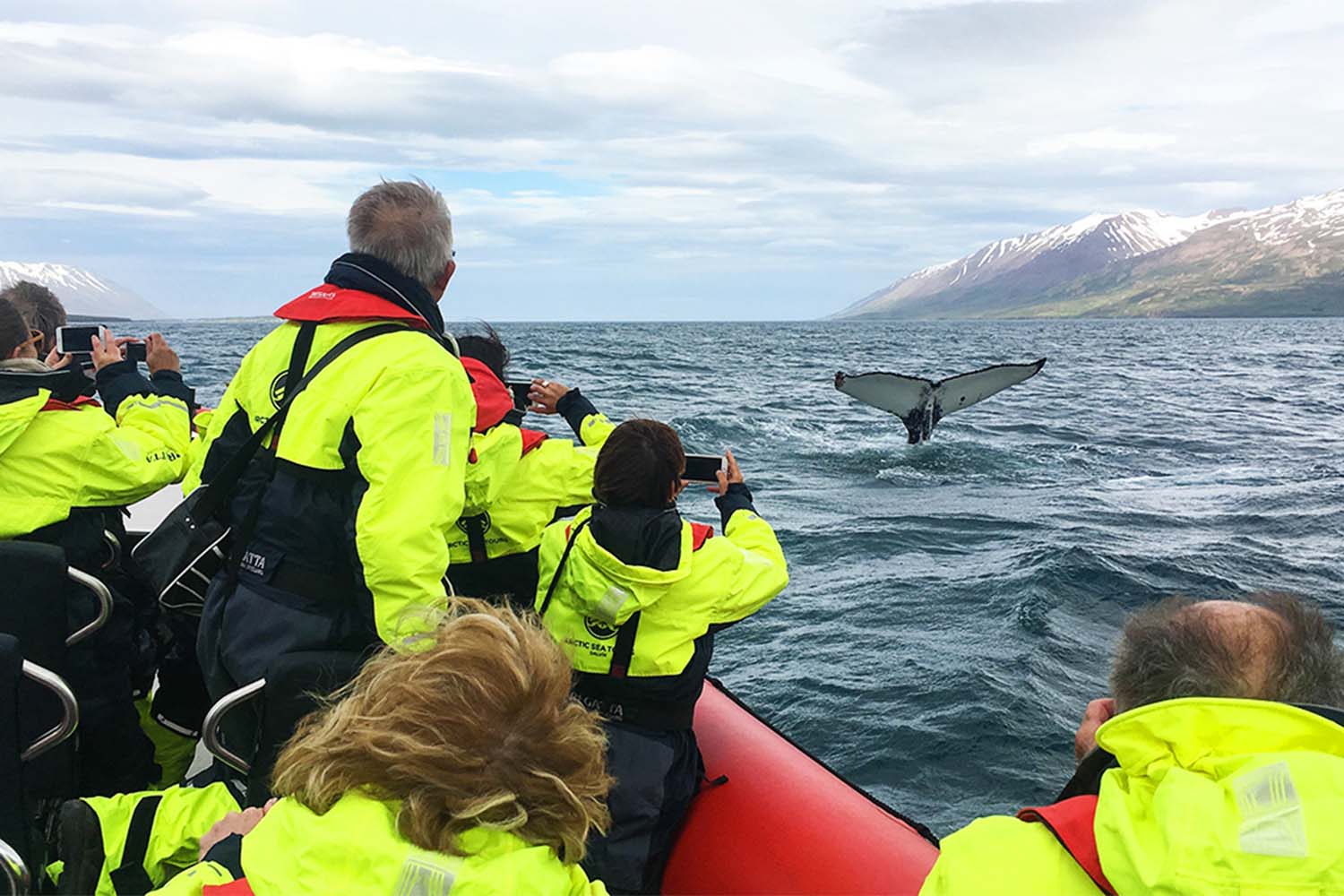
Layer up always. Wear a moisture-wicking base layer, a fleece mid-layer, and a waterproof jacket on top. The ocean runs 10–15°F colder than whatever your weather app says onshore. Add a beanie, gloves, and grippy waterproof shoes, and you’ll actually enjoy the trip instead of spending it shivering below deck.
There’s a moment every first-time whale watcher experiences. You’re standing on the dock, it’s a perfectly warm morning, and someone next to you is stuffing a puffy coat into their bag. You think, really? It’s 68 degrees out. Three hours later, you’re somewhere off the coast of Monterey or Cape Cod, salt spray hitting your face, wind cutting through you like you’re wearing tissue paper and that person in the puffy coat is smiling. You are not.
Knowing what to wear when whale watching isn’t just about comfort. It’s about staying out on deck long enough to actually see the whales.
Why the Ocean Is a Different Beast Entirely
Here’s something most people genuinely don’t account for: open water is not the same as standing outside on land. Even on a calm, sunny day, your boat is moving. That constant wind even a gentle one strips heat from your body continuously. Combine that with ocean humidity, occasional spray, and the fact that there’s essentially no shelter unless you go below deck, and conditions feel dramatically colder than they look from shore.
The rule of thumb that experienced whale watchers swear by? Dress like it’s 10 to 15 degrees colder than the shore forecast. Seriously. Your phone says 65°F in Bar Harbor? Dress for 50°F. Pacific Northwest trip in October? Assume it’s going to feel like 40 and plan accordingly.
Once you internalize that one principle, the rest of the packing decisions get a lot easier.
So — Jacket or Layers? Here’s the Real Answer
The honest answer is both, but layers come first, and the jacket is the finishing touch not the whole strategy.
Here’s the problem with just grabbing a jacket and calling it done: your body temperature shifts constantly throughout the trip. You’re warm loading the boat. Cold once you’re moving. Warm again when someone shouts “breach at two o’clock!” and you sprint to the rail. Cold again standing still for the next twenty minutes waiting. A single jacket, no matter how good it is, locks you into one setting. Layers let you respond to what’s actually happening.
Think of it like a thermostat versus a light switch. A jacket is a light switch on or off. Layers are a thermostat. You want the thermostat.
The Three-Layer System (And Why Each Part Matters)
Base Layer: The Unsung Hero
Your base layer is the one touching your skin, and its whole job is moisture management. When you get warm and start sweating, the base layer pulls that moisture away from your body so it doesn’t sit against your skin and chill you later.
The enemy here and I cannot stress this enough is cotton. Cotton absorbs sweat and moisture, holds onto it, and then just… stays wet. On a boat with wind hitting you constantly, damp cotton against your skin is genuinely awful. It’s the kind of cold that gets into your bones.
Merino wool is the gold standard for base layers. It wicks moisture, regulates temperature, and stays reasonably warm even when damp. Synthetic moisture-wicking fabrics like polyester work great too and are usually cheaper. Either one will serve you well. Just leave the cotton tee in the car.
For most U.S. trips from spring through fall Monterey, Cape Cod, San Diego, Depoe Bay a lightweight merino long-sleeve does the job beautifully. Winter trips off New England or up in Alaska? Go mid-weight thermal.
Mid-Layer: Where the Real Warmth Lives
This is your insulation. It traps the body heat you generate and keeps it from escaping into the wind.
A zip-up fleece pullover is genuinely the best option for most whale watching situations. It’s warm, it stays functional even when slightly damp (unlike down, which loses loft when wet and becomes basically useless), and the zip gives you control. Sprint across the deck? Unzip. Standing at the bow in a stiff breeze? Zip it back up. That ability to adjust in ten seconds is more valuable than it sounds.
Down vests or light puffer jackets work beautifully on drier, colder days think Alaska in summer or the Pacific coast on a rare clear day. But if there’s any chance of getting wet, fleece is your safer bet. It just keeps working.
Outer Shell: Wind and Water, Meet Your Match
Now the jacket earns its spot. The outer shell isn’t primarily about warmth your base and mid-layer handle that. The shell is a barrier. It blocks wind chill and deflects ocean spray so your warm inner layers can actually do their job.
What you’re looking for:
- Waterproof or at minimum water-resistant — look for DWR coating or fully taped seams
- Windproof — essential, not optional
- A hood — trust me on this one, the hood matters enormously once you’re moving
- Packable is a nice bonus if you tend to warm up and want to stuff it in a bag
You don’t need to drop serious money here. Columbia, REI Co-op, Patagonia’s mid-range stuff, even solid Amazon finds will absolutely work. The premium gear is nice, but a $80 waterproof shell from Columbia beats a $400 non-waterproof jacket every single time on a whale watching boat.
One practical tip: go for a brighter color on your outer layer. It makes you more visible on deck genuinely useful if it’s foggy or choppy and it photographs better when someone catches you on camera reacting to a whale breach.
Don’t Forget Everything Below Your Neck
People obsess over their torso and completely forget the rest. Then they wonder why they’re miserable.
Your head: A beanie or wool hat is non-negotiable on most trips. Wind off open water is relentless, and you lose a surprising amount of body heat through your head. A hat with ear coverage is ideal. If it’s cold and rainy, wearing a beanie under your jacket hood is not overkill it’s just smart.
Your hands: Bring gloves. Even on summer trips in California, plenty of people end up grateful for them once the boat gets going. Lightweight windproof gloves are perfect. Fingerless gloves are a clever option if you’re planning to use your phone or camera a lot you stay warm without losing dexterity when you need to zoom in on a spout.
Your feet: This one matters for safety, not just comfort. The deck gets wet. Regular sneakers become slip hazards. Rubber-soled boat shoes, waterproof hiking boots, or even solid rain boots give you traction on a moving, wet deck. Cold, wet feet genuinely ruin a whale watching trip in a way that nothing else quite matches. Wool socks underneath add a layer of warmth that’s absolutely worth it.
A Quick Guide by Location
Because dressing for whale watching in Hawaii is very different from dressing for it in Alaska:
California (Monterey, Channel Islands, San Diego): The Pacific is cold year-round regardless of how warm the beach looks. Surface temps hover around 55–60°F even in summer. Full three-layer system always. Summer trips can use a lighter fleece. Winter demands real insulation.
New England (Cape Cod, Bar Harbor, Provincetown): July and August are manageable with two layers and a light shell. Spring and fall need the full setup. Winter whale watching here is genuinely hardcore heavy everything, hand warmers in every pocket.
Pacific Northwest (Puget Sound, Depoe Bay, Oregon coast): Dress for rain, period, regardless of what the sky looks like when you leave the house. Waterproof outer layer is completely non-negotiable. The weather changes fast and it changes wet.
Alaska (Kenai Fjords, Juneau, Sitka): This is the most demanding whale watching environment in the country. Thermal base, heavy fleece or down mid-layer, fully waterproof shell, waterproof pants, insulated boots. Many tours up here provide float suits or survival suits still wear everything underneath them.
Hawaii (Maui, Big Island — humpback season runs December through April): The pleasant exception to all of the above. A light long-sleeve and a windbreaker usually covers it. Still cooler on the water than on the beach, but nothing like the mainland.
What to Leave at Home
Equally important: some things actively work against you.
Cotton anything — jeans, sweatshirts, hoodies. Already covered this but it bears repeating. Cotton and boats don’t mix.
Big bulky coats that restrict movement — you’re going to be leaning over rails, turning quickly, potentially walking across a pitching deck. A massive parka that makes you move like a snowman is more hindrance than help.
Dress shoes, sandals, heels — this is a safety thing, genuinely. Slipping on a wet deck is no joke.
All-white or very light outer layers if you like your clothes sunscreen smears and sea spray stains are real, and they’re not coming out.
A Few Extra Things Worth Tossing in Your Bag
- Sunscreen — water reflects UV hard, even through cloud cover. Burns happen fast on the water.
- Polarized sunglasses — cuts the glare and, honestly, helps you spot spouts and dorsal fins at a distance.
- A small dry bag — for your phone, camera, or anything else that hates saltwater.
- Seasickness medication — take it before you board, ideally 30–60 minutes ahead. Dramamine, Bonine, or even ginger chews. After symptoms start is too late.
- A change of clothes in the car — salt spray is subtle in the moment and very obvious on the drive home. Dry clothes waiting for you are a gift to your future self.
The Thing Most People Miss
Dressing well for whale watching isn’t really about fashion or even just comfort. It’s about staying on deck.
Because that’s where the whales are. The people who see the most aren’t the luckiest they’re the ones who stayed outside, in the wind, at the rail, for the full trip. The ones who got cold retreated below and came back up to find that while they were warming up, a humpback breached 50 feet off the bow.
Pack smart. Layer properly. Dress for the water, not your weather app. Stay outside.
When a 40-ton animal comes up out of the ocean and hangs in the air for a half second before crashing back down and it will happen you want to be standing there to see it. Frozen cotton hoodie or not, you’ll forget you were ever cold.
