

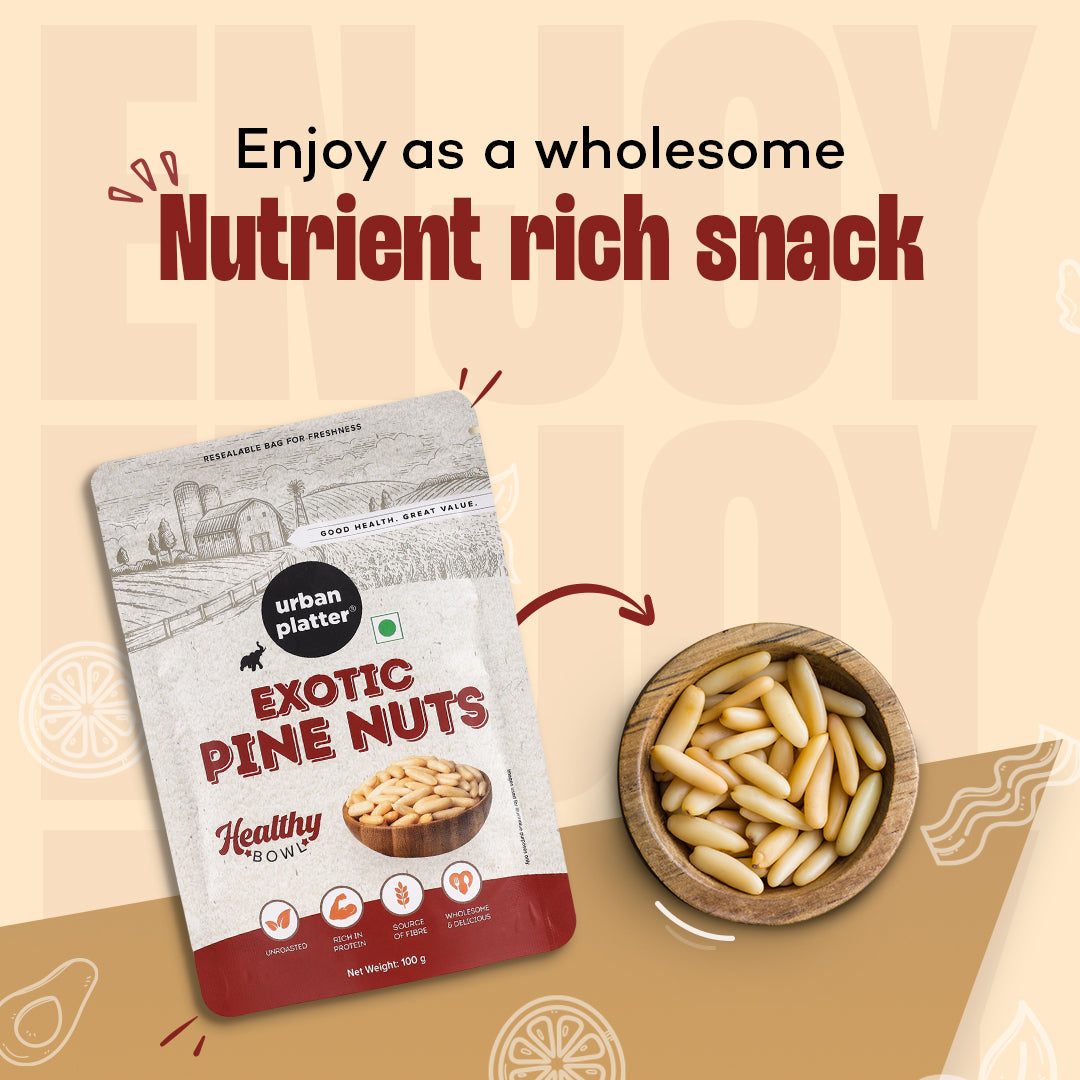
In the world of superfoods, nuts are the undisputed heavyweights. They are crunchy, portable, and packed with healthy fats. But while almonds, walnuts, and pistachios often hog the limelight, the exotic pine nuts (or pignoli) sits in a league of its own. Harvested from the scales of pine cones, these buttery seeds are technically seeds, but in the culinary and nutritional world, they are the “gourmet” nut.
But does their premium price tag translate to superior health benefits? Let’s explore the nutrition facts and see how pine nuts stack up against the most popular contenders: walnuts, almonds, and Brazil nuts.
The Pine Nut Profile: The Heart and Hunger Hero
Pine nuts are unique because they contain pinolenic acid, a polyunsaturated fatty acid found exclusively in pine nut oil. Research suggests that pinolenic acid may help trigger the release of hunger-suppressing hormones like CCK and GLP-1.
- The Weight Management Edge: If you are looking for a snack that actually tells your brain you’re full, pine nuts have a biological advantage over many other nuts.
- Heart Health: They are rich in monounsaturated fats (like those in olive oil) and magnesium, which are essential for maintaining healthy blood pressure and arterial function.
Pine Nuts vs. Walnuts: The Brain Power Battle
When it comes to the “King of Omega-3s,” the walnut still holds the crown.
- Omega-3 Content: Walnuts contain significantly higher levels of alpha-linolenic acid (ALA). If your primary health goal is reducing systemic inflammation or boosting cognitive function, walnuts are the superior choice.
- The Pine Nut Counter-Punch: While walnuts win on Omega-3s, pine nuts offer nearly double the Vitamin K per serving. Vitamin K is crucial for bone mineralization and blood clotting—areas where walnuts are less effective.
Pine Nuts vs. Almonds: The Vitamin E and Fiber Face-off
Almonds are often the go-to for fitness enthusiasts because they are relatively lower in calories and higher in protein than other nuts.
- Fiber & Protein: Almonds provide about 3.5 grams of fiber per ounce, whereas pine nuts offer only about 1 gram. For digestive health, almonds win.
- Antioxidants: Both are high in Vitamin E, a powerful fat-soluble antioxidant that protects skin from oxidative stress. However, pine nuts contain more lutein, a carotenoid that is vital for eye health and preventing macular degeneration.
Pine Nuts vs. Brazil Nuts: The Mineral Kings
If we look at mineral density, the Brazil nut is a powerhouse of selenium, a trace element vital for thyroid function. In fact, eating just two Brazil nuts a day can meet your entire daily requirement.
-
Zinc and Iron: Pine nuts, however, are an excellent source of zinc (essential for immunity and wound healing) and iron (necessary for oxygen transport). Compared to most other nuts, pine nuts are one of the best plant-based sources of iron, making them a “must-have” for vegetarians and vegans who often struggle with iron intake.
Nutritional Comparison at a Glance
To make it easy, here is how a standard 28g (1 oz) serving compares across the board:
| Nut Type | Primary Benefit | Key Nutrient |
| Pine Nut | Appetite Suppression | Pinolenic Acid, Zinc, Vitamin K |
| Walnut | Brain Health | Omega-3 (ALA), Polyphenols |
| Almond | Weight Loss / Digestion | Fiber, Vitamin E, Protein |
| Brazil Nut | Thyroid Support | Selenium, Magnesium |
The “Pine Nut Syndrome” (A Note of Caution)
While pine nuts are a nutritional powerhouse, they come with a quirky side effect known as “Pine Mouth” (Metallogeusia). For a small percentage of people, consuming certain species of pine nuts can cause a bitter, metallic taste in the mouth that lasts for several days. It isn’t dangerous, but it is a distinct “con” that you won’t find with almonds or walnuts!
Which One Should You Choose?
The “best” nut depends entirely on your specific health goals:
- For Heart Health & Satiety: Choose Pine Nuts. Their unique fatty acid profile is unmatched for controlling hunger pangs and supporting lipid profiles.
- For Brain & Inflammation: Choose Walnuts. Their Omega-3 density is the gold standard for plant-based fats.
- For Muscle Recovery & Skin: Choose Almonds. The combination of protein and Vitamin E makes them a post-workout staple.
- For Immunity: Stick with Pine Nuts. The high zinc content is a secret weapon for your white blood cells.
How to Incorporate Pine Nuts into Your Diet
Because pine nuts have a high oil content, they can go rancid quickly. To get the most health benefits:
- Store them in the fridge to preserve those delicate polyunsaturated fats.
- Toast them lightly. This releases the oils and enhances the flavor without destroying the nutrient profile (just don’t burn them!).
- Use them as a garnish. You don’t need a whole bowl; a tablespoon over a salad, pasta, or even a fruit smoothie provides a significant mineral boost.
The Bottom Line
No single nut can do it all. While pine nuts offer rare benefits like appetite suppression and high zinc levels, they are best used as part of a diversified “nut rotation.” By mixing pine nuts with walnuts and almonds, you ensure you’re getting a full spectrum of fatty acids, minerals, and antioxidants.
