

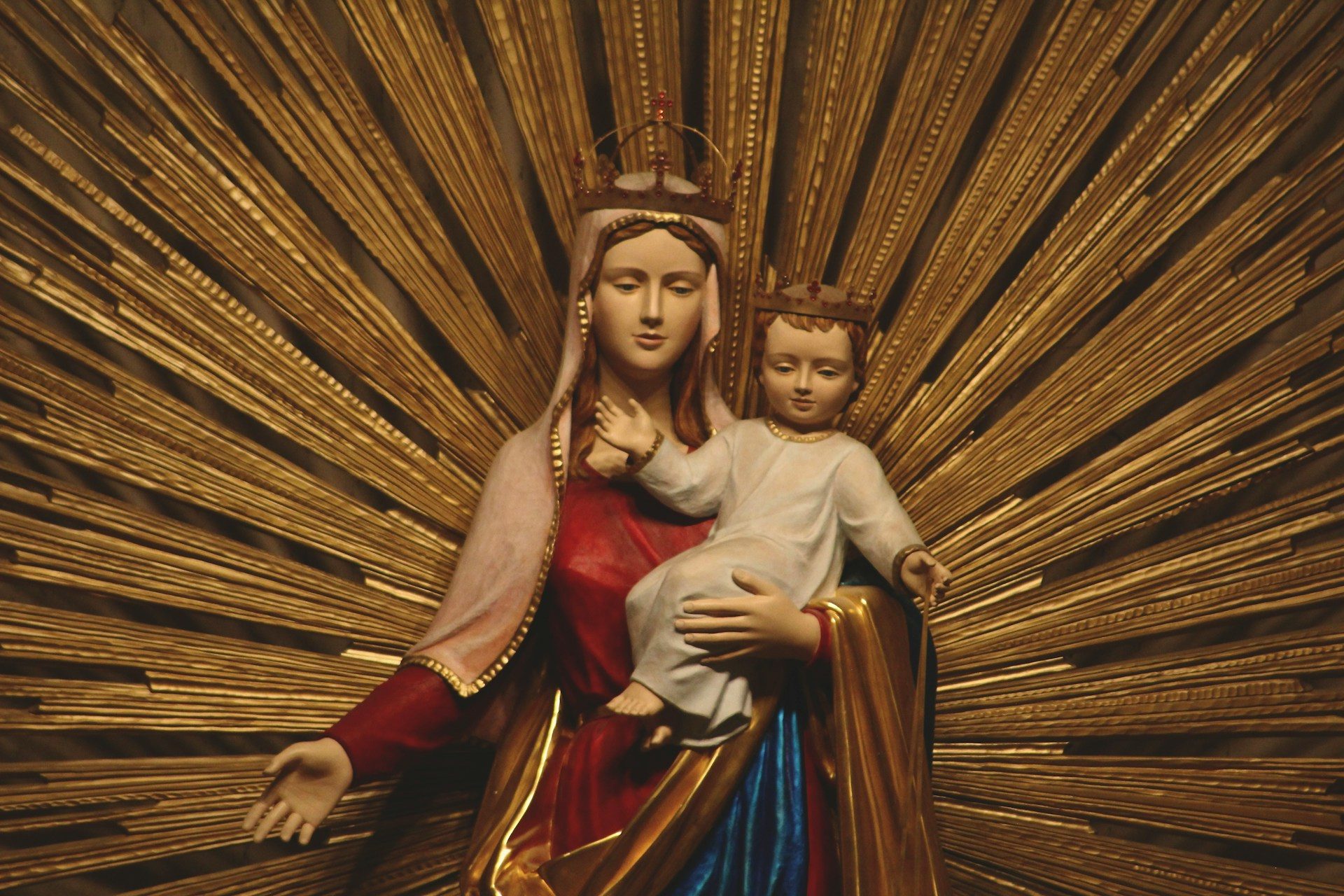
The Madonna and Child painting represents one of the most enduring and sacred images in Christian art: the Virgin Mary (Madonna) holding the infant Jesus Christ. At its simplest level, it shows a mother with her child, but its deeper meaning goes far beyond an ordinary maternal scene. The subject embodies central Christian beliefs about the Incarnation — the idea that God became human in the person of Jesus. By portraying Christ as a vulnerable baby in Mary’s arms, artists emphasize both his humanity and his divinity. The Madonna becomes not only a mother figure but also a spiritual symbol of purity, grace, and divine love, while the Child represents salvation and the future redemption of humankind.
In Christian theology, Mary is revered as the Mother of God (Theotokos), and Madonna and Child paintings communicate this holy status visually. The image reinforces the belief that Mary was chosen by God for a unique role in history: to give birth to Christ, the Savior. Artists often portray her with calmness, humility, and gentle sorrow, suggesting that she understands the immense destiny of her child. Thus, the Madonna and Child is not merely a tender family portrait; it is a theological statement about the connection between heaven and earth, the divine entering human life through Mary.
One of the most important representations within these paintings is the theme of motherhood and unconditional love. Mary is often shown cradling Jesus with warmth and care, highlighting the universal human bond between mother and child. This emotional intimacy makes the divine story relatable to ordinary believers. The scene invites viewers to reflect on compassion, protection, and nurturing, suggesting that God’s love can be experienced through human relationships. In this way, the Madonna becomes an accessible figure for worshippers — someone who embodies gentleness and mercy.
At the same time, Madonna and Child paintings often carry a quiet sense of foreshadowing. Even as Jesus is shown as an innocent infant, his future suffering and crucifixion are implied through symbolic elements. Mary’s expression may appear solemn or reflective rather than joyful, hinting that she is aware of her son’s destiny. Sometimes the child holds a small cross, a crown of thorns, or gestures toward heaven, reminding viewers that his birth is inseparable from his sacrifice. This dual message — tenderness mixed with prophecy — gives these works profound emotional depth.
The Madonna and Child also represents the Christian idea of intercession. Mary is often viewed as a mediator between humanity and Christ. Paintings of her holding Jesus suggest that she presents him to the world, offering him as a source of salvation. For centuries, believers prayed before these images, asking Mary to intercede on their behalf. The visual closeness between mother and child symbolized her closeness to Christ and her compassionate role toward humankind. Thus, the painting becomes not only art but also an object of devotion and spiritual comfort.
In many works, Mary is portrayed as the ideal of purity and holiness. Artists use specific symbols to communicate her virginity and divine favor: blue robes representing heavenly truth, white lilies symbolizing purity, or golden halos indicating sanctity. These visual cues reinforce Mary’s spiritual perfection and her special role in Christian belief. The Madonna becomes more than an individual woman; she becomes an archetype of faith, obedience, humility, and grace. Through her, viewers are invited to contemplate moral virtues and spiritual ideals.
Historically, Madonna and Child paintings were especially important during the Middle Ages and the Renaissance, when religious imagery was central to everyday life. Most people could not read scripture, so paintings served as visual storytelling tools. Churches commissioned such works to teach Christian doctrine and inspire devotion. Artists like Giotto, Fra Angelico, Leonardo da Vinci, Raphael, and Michelangelo created iconic versions, each reflecting both artistic innovation and spiritual reverence. These paintings were not just decoration; they were a form of religious communication and worship.
During the Renaissance, the Madonna and Child theme also became a way for artists to explore human beauty and emotion. Renaissance painters emphasized realism, soft expressions, anatomical accuracy, and natural interaction between mother and child. Mary became more human and approachable, while still retaining divine dignity. This blending of sacred meaning with human warmth reflects Renaissance ideals: the belief that the divine could be understood through the beauty of the natural world and the human experience.
The Madonna and Child also represents the concept of the Church itself. Mary is sometimes interpreted symbolically as the mother of all believers, just as she is the mother of Christ. In this sense, she embodies the nurturing role of the Church, offering spiritual guidance and protection. The infant Jesus represents the foundation of faith, while Mary represents the faithful community that carries and presents Christ to the world. Thus, the image communicates not only personal devotion but also collective Christian identity.
Different cultural contexts shaped how Madonna and Child paintings were represented. In Byzantine art, for example, Mary is often shown in a formal, iconic style, emphasizing her majesty and spiritual authority rather than intimacy. In Western European art, especially later, she is portrayed more tenderly and naturally. These variations show how the same theme could express different theological emphases: divine transcendence in one context, maternal closeness in another.
The Madonna and Child painting is also deeply tied to the idea of hope and redemption. The child Jesus symbolizes new beginnings, divine promise, and the future salvation of humanity. His presence in Mary’s arms reassures believers that God has entered the world not as a distant ruler but as a vulnerable child. The painting thus becomes a message of comfort: that divine love is gentle, personal, and present within human life.
Moreover, these paintings often reflect social ideals of femininity, motherhood, and family. Mary is portrayed as the perfect mother: patient, loving, and devoted. For centuries, this influenced cultural expectations of women and motherhood. At the same time, Mary’s strength is spiritual rather than political, suggesting a quiet power rooted in faith and sacrifice. The Madonna becomes both a religious symbol and a cultural model.
In many compositions, the Madonna and Child are surrounded by angels, saints, or symbolic landscapes. These additions expand the meaning of the painting beyond a private moment into a cosmic vision. Angels signify heavenly presence, saints represent the Christian community, and landscapes may symbolize paradise or the world Christ has come to redeem. Even small details, like fruit (symbolizing the Fall and redemption) or flowers (symbolizing purity and resurrection), add layers of meaning.
The popularity of Madonna and Child imagery across centuries shows its universal emotional resonance. Even beyond Christian devotion, the image speaks to human experiences of care, innocence, vulnerability, and love. It combines spiritual mystery with everyday tenderness. That is why it remains powerful even for modern viewers who may not share the same religious beliefs — it still communicates beauty, compassion, and profound connection.
Ultimately, the Madonna and Child painting represents the meeting point between the divine and the human. Mary symbolizes faith, humility, and maternal compassion, while Jesus symbolizes hope, salvation, and divine presence in the world. Together, they form an image that expresses Christianity’s central message: that God’s love enters human life intimately, through birth, motherhood, and sacrifice. This is why the Madonna and Child remains one of the most painted, revered, and emotionally moving subjects in art history.
