

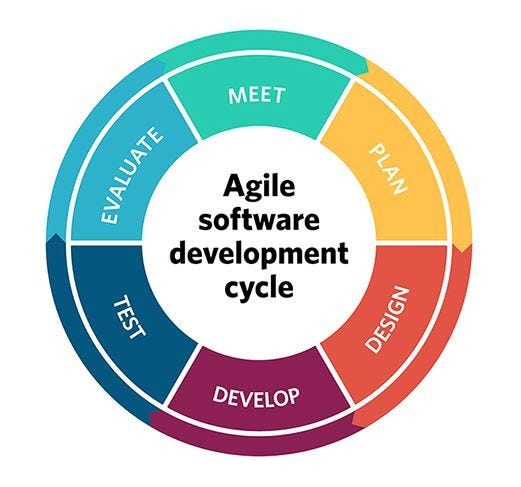
Agile software development has transformed the process of creating and delivering software. Its iterative and collaborative approach enables teams to adapt to changes rapidly, ensuring high-quality software products. However, in the ever-evolving landscape of technology, the integration of advanced technologies has further revolutionized agile methodologies. This article explores how an agile software development company uses advanced technologies to enhance agile software development services.
Before discussing emerging or advanced technologies, let’s understand Agile development.
Get started- What is Agile Software Development?
An iterative and flexible approach to creating software that focuses on continuous improvement, collaboration, adaptability, and customer satisfaction. It emphasizes breaking down the software development process into smaller increments called “sprints” or iterations. Thus, teams can deliver working and shippable product increments at shorter intervals.
The core principles of Agile software development services, as outlined in the Agile Manifesto, prioritize:
- Individuals and interactions over processes and tools.
- Working software over comprehensive documentation.
- Customer collaboration over contract negotiation.
- Responding to change over following a plan.
Agile methodologies, such as Scrum, Kanban, Extreme Programming (XP), and others, promote close collaboration among cross-functional teams. These teams work collaboratively, adapt to changing requirements, and continuously communicate to deliver value to customers.
Explore- Advanced Technologies Enhance Agile Software Development
Automation and Continuous Integration/Continuous Delivery (CI/CD)
Advanced technologies like automation and CI/CD pipelines have significantly streamlined the software development process within the agile framework. Automation tools facilitate the automation of repetitive tasks, such as testing, deployment, and code reviews. It reduces manual effort and increases productivity. CI/CD pipelines enable continuous integration of code changes into a shared repository, followed by automated testing and deployment.
An agile software development company uses automation to speed feedback, catch bugs early, and deliver top-notch software in iterative cycles. Tools like Jenkins, GitLab CI/CD, and Circle CI have become integral in facilitating seamless automation and CI/CD pipelines.
Artificial Intelligence (AI) and Machine Learning (ML)
AI and ML tech have transformed Agile software development, enabling predictive analytics, smart decision-making, and automating intricate tasks. AI tools analyze extensive data to offer insights like risk identification, project timeline prediction, and resource allocation optimization.
An Agile software development company leverages AI and ML to improve estimation accuracy, enhance sprint planning, and optimize resource allocation.
Additionally, AI-driven testing tools can autonomously generate test cases, predict potential failure points, and optimize test coverage.
DevOps and Infrastructure as Code (IaC)
DevOps practices emphasize collaboration, automation, and integration between development and operations teams. It aims to streamline the entire software delivery lifecycle, from coding to deployment. Infrastructure as Code (IaC) is a pivotal aspect of DevOps. It allows infrastructure provisioning and management through machine-readable script files rather than manual configurations.
An Agile software development company integrate DevOps principles to achieve greater agility and consistency in deploying applications. Tools like Kubernetes, Docker, and Ansible enable containerization, orchestration, and automated infrastructure management.
Internet of Things (IoT) and Edge Computing
The rise of IoT and edge computing has expanded the scope of agile software development services. Internet of Things (IoT) devices produce extensive data that requires real-time processing and analysis. Combining IoT, edge computing, and Agile practices enables swift adaptation to changing needs and rapid development.
An Agile software development company leverages IoT and edge computing technologies to develop and deliver innovative solutions. They can employ agile methodologies to iterate and evolve software for diverse IoT ecosystems. Besides, it ensures interconnected devices and systems’ interoperability, security, and reliability.
Cloud Computing and Scalability
Cloud computing has emerged as a fundamental enabler for agile software development services, offering scalability, flexibility, and cost-effectiveness. Agile teams leverage cloud services to access computing resources on demand, allowing them to scale infrastructure according to needs.
Cloud platforms like AWS and Microsoft Azure provide various services, including serverless computing, storage, and databases. These services empower an agile software development company to focus more on development and less on managing infrastructure.
Benefits of Integrating Advanced Technologies with Agile Practices
The integration of advanced technologies with agile methodologies yields numerous benefits for software development teams: –
- Increased Efficiency
By integrating Automation, AI/ML, and DevOps practices, workflows become more streamlined. Besides, it reduces manual efforts and ultimately enhances overall operational efficiency.
- Elevated Quality Standards
Implementing continuous testing, automated deployment procedures, and predictive analytics significantly elevates software quality. It results in a decrease in defects and a more refined end product.
- Accelerated Time-to-Market
By using CI/CD pipelines cloud resources and following agile principles, software updates reach end-users much faster. It allows for quicker responses to market demands.
- Enhanced Adaptability
Agile methodologies combined with advanced technologies empower teams to adapt swiftly to changing requirements and fluctuations in the market. Besides, it fosters greater flexibility in approach and implementation.
- Optimized Cost Efficiency
Leveraging cloud computing services, automated processes, and effective resource management leads to substantial cost savings. It contributes to overall cost optimization within the development cycle.
Transform Your Vision: Collaborate with Agile Software Development Company Today!
Challenges and Considerations
Despite the evident advantages, integrating advanced technologies into agile software development poses specific challenges:
1. Skillset and Knowledge Gap: Adopting new technologies requires teams to acquire specialized skills and knowledge, which might lead to a learning curve & potential resistance.
2. Security and Compliance: With increased automation and interconnected systems, ensuring robust security measures and compliance becomes critical.
3. Tool Selection and Integration: Choosing the right tools and seamlessly integrating them into existing workflows can be complex and time-consuming.
4. Cultural Adaptation: Agile transformation and technological advancements might necessitate an organisational cultural shift, requiring effective change management.
Conclusion
Integrating advanced technologies marks a pivotal evolution in enhancing Agile software development practices. Automation, AI/ML, DevOps, IoT, and cloud computing have collectively redefined the landscape. They empower agile teams to expedite delivery, elevate product quality, and remain responsive to dynamic market demands. Embracing these technological advancements streamlines processes and fosters a culture of innovation and continuous improvement.
