

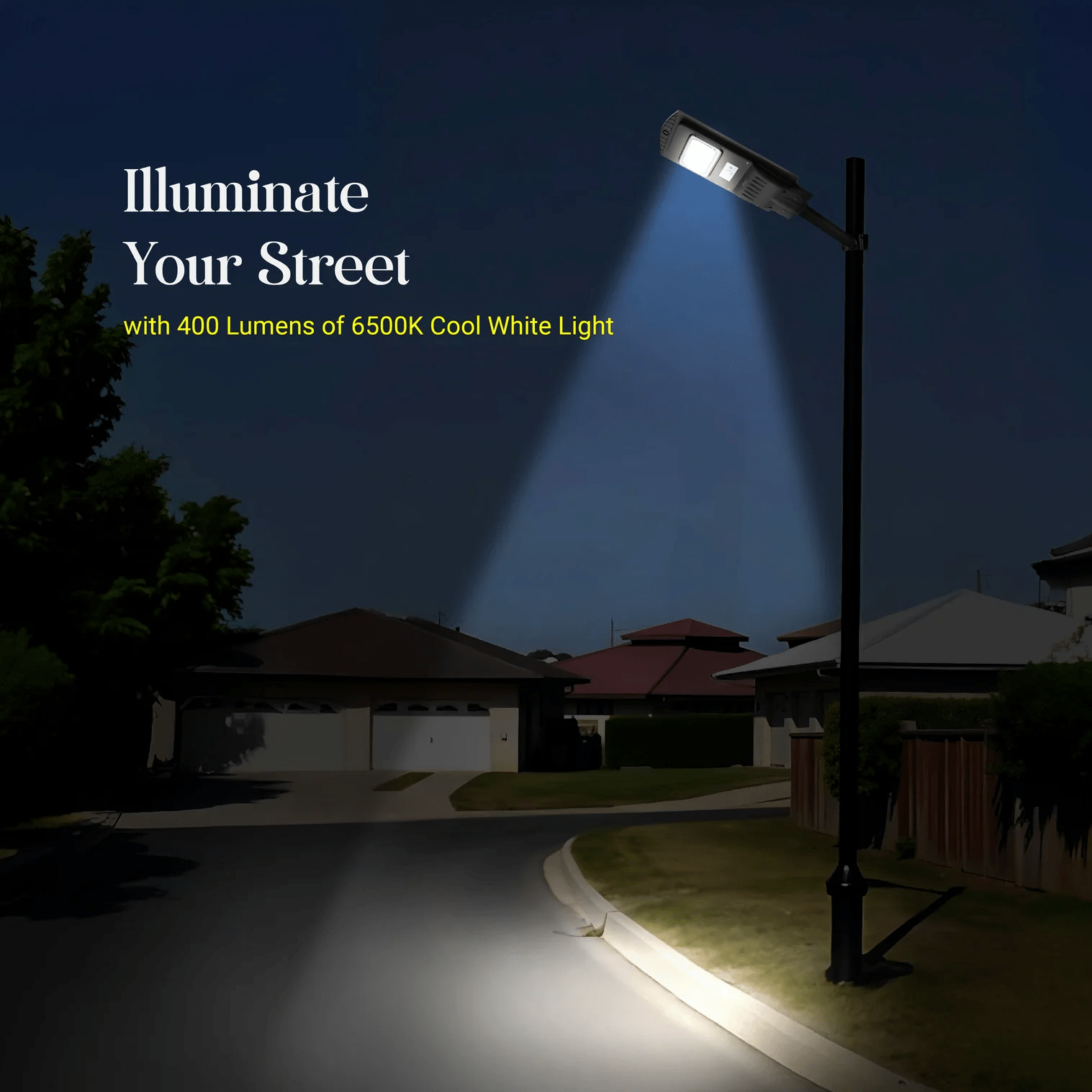
Rising electricity costs are a growing concern for city administrations, housing societies, and local authorities. Street lighting alone consumes a significant portion of the total electricity budget, especially in urban areas where lights operate every night for long hours. This is where solar street lights are proving to be a smart, cost-effective, and future-ready solution.
By using renewable solar energy instead of grid electricity, solar street lights help cities and societies cut down electricity bills while also supporting sustainability goals. Let’s understand how they work and why they are becoming the preferred choice for modern infrastructure.
Understanding How Solar Street Lights Work
Solar street lights operate independently of the electricity grid. During the day, solar panels absorb sunlight and convert it into electrical energy. This energy is stored in built-in batteries. At night, the stored power is used to run high-efficiency LED lights automatically.
Key components include:
- Solar panel
- Rechargeable battery
- LED lamp
- Charge controller
- Light or motion sensor
Because these lights generate and consume their own power, there is zero electricity consumption from the grid.
No Electricity Consumption from the Grid
The biggest reason solar street lights reduce electricity bills is simple: they do not use grid power.
Traditional street lights depend entirely on electricity supplied by power companies. This results in:
- Monthly electricity charges
- Demand charges
- Additional costs during peak usage hours
Solar street lights eliminate all of this. Once installed, they run purely on solar energy. For cities managing thousands of street lights, the savings can be massive year after year.
Major Savings on Monthly Utility Bills
Street lighting can account for a large share of a city’s or housing society’s electricity expenses. When solar street lights replace conventional lights:
- Monthly power bills drop significantly
- Budget pressure on municipalities is reduced
- Housing societies can lower maintenance charges
For residential societies, this often means lower common-area electricity costs, which directly benefits residents.
Reduced Dependence on Rising Electricity Tariffs
Electricity tariffs continue to increase due to fuel costs, infrastructure upgrades, and demand growth. Traditional street lights are affected by every tariff hike.
Solar street lights protect cities and societies from these rising costs because:
- Sunlight is without money and unlimited
- Operating costs remain stable
- Long-term energy budgeting becomes easier
This financial predictability is extremely valuable for government bodies and residential management committees.
Lower Maintenance and Operational Costs
Solar street lights are designed with modern technology that reduces ongoing expenses.
Key cost-saving factors include:
- LED lights consume less energy and last much longer than traditional bulbs
- Automatic on/off sensors remove the need for manual switching
- No underground cabling, reducing repair and inspection costs
- Fewer breakdowns, especially in areas with power fluctuations
Compared to conventional street lighting systems, maintenance costs are significantly lower over the lifetime of the installation.
No Cost for Trenching and Cabling
Traditional street lights require extensive electrical infrastructure:
- Underground cables
- Trenching work
- Transformers and control panels
This setup is expensive to install and even more costly to repair.
Solar street lights are standalone units. Since they do not require external wiring:
- Installation is faster and cheaper
- No risk of cable theft or damage
- No repair cost related to underground faults
For new urban developments and rural roads, this alone can save a substantial amount of money.
Smart Features That Save Energy
Modern solar street lights come with intelligent features that further reduce energy use:
- Motion sensors: Lights operate at full brightness only when movement is detected
- Dimming modes: Light intensity reduces during low-traffic hours
- Smart controllers: Optimize battery usage and lighting schedules
These features ensure that energy is used only when needed, maximizing efficiency and extending battery life.
Ideal for Cities, Highways, and Housing Societies
Solar street lights are highly adaptable and can be used in:
- Urban roads and smart city projects
- Residential societies and gated communities
- Parks, pathways, and parking areas
- Highways and rural roads
For housing societies, this means common-area lighting without adding to electricity bills. For cities, it means long-term savings across large-scale infrastructure.
Long-Term Return on Investment
While the initial installation cost of solar street lights may be higher than conventional lights, the long-term financial benefits are substantial.
Over time, savings come from:
- Zero electricity bills
- Low maintenance expenses
- Long lifespan of LED lights and solar panels
- Reduced replacement costs
In many cases, the system pays for itself within a few years. After that, the savings directly benefit city budgets and society funds.
Supporting Sustainable and Green Development
Beyond cost savings, solar street lights contribute to:
- Reduced carbon emissions
- Lower dependence on fossil fuels
- Cleaner and greener cities
Many governments also offer incentives or subsidies for solar lighting projects, further reducing overall costs.
Conclusion
Solar street lights are not just an environmentally responsible choice—they are a financially smart investment for cities and housing societies. By eliminating grid electricity usage, lowering maintenance costs, and protecting against rising power tariffs, they help significantly reduce electricity bills in the long run.
As urban areas expand and energy costs continue to rise, solar street lights offer a reliable, cost-effective, and sustainable lighting solution. For cities planning future-ready infrastructure and societies looking to cut common-area expenses, switching to solar street lights is a decision that delivers both immediate and long-term benefits.
