

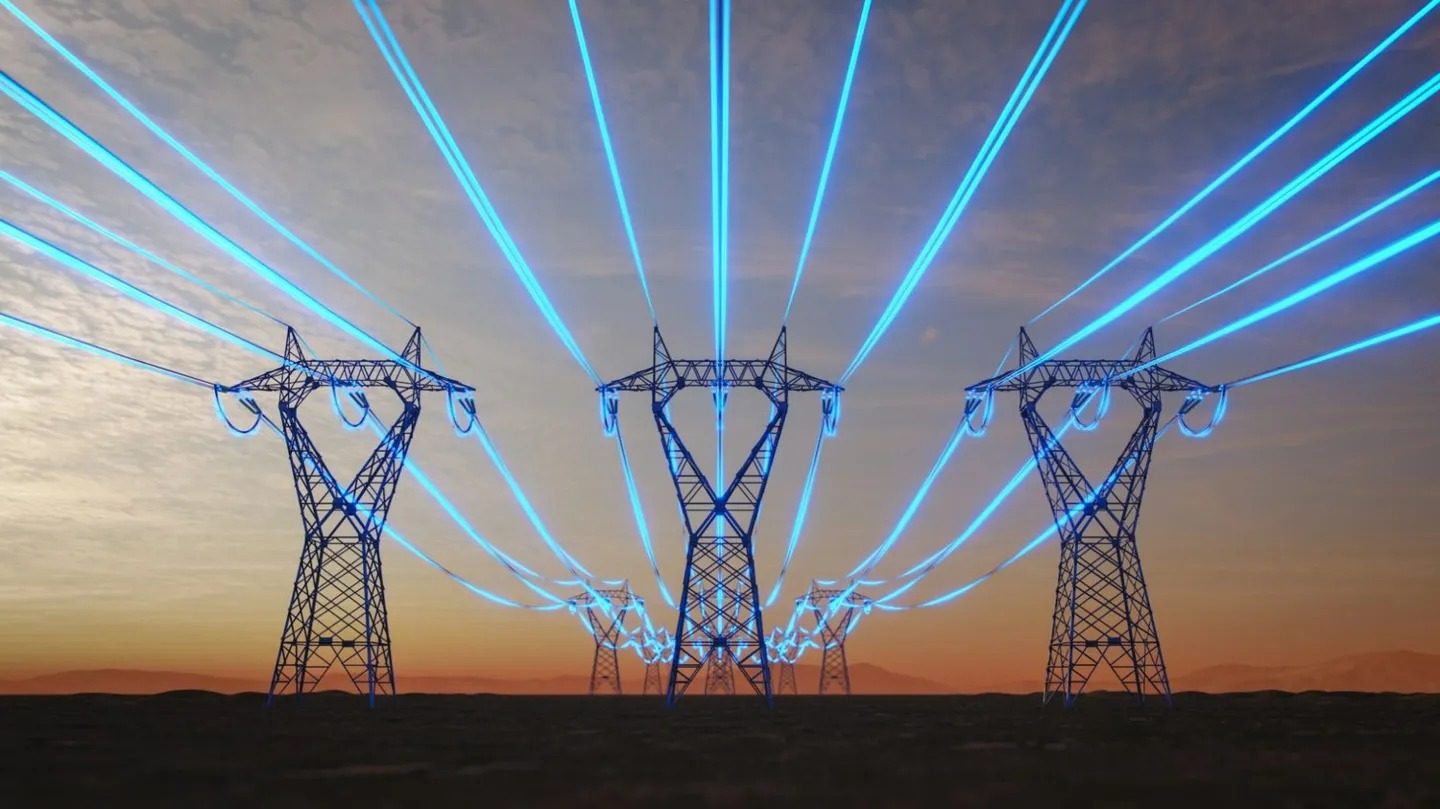
Saudi Arabia’s electricity infrastructure is undergoing a fundamental transformation. As the Kingdom
accelerates toward its Vision 2030 targets, utilities and industrial operators face mounting pressure to modernize
aging grid assets while integrating massive renewable energy capacity. The Saudi Electricity Company (SEC)
has installed over 10 million smart meters, signaling a broader shift toward intelligent grid operations. Yet
behind this digital facade lies a critical challenge: substations built on decades-old analog technology cannot
keep pace with the demands of a modern, interconnected power system.
Digital substations represent the next evolution in grid infrastructure. Unlike conventional substations that rely
on copper wiring and manual operations, digital substations leverage IEC 61850 communication protocols, fiber
optic networks, and intelligent electronic devices (IEDs) to enable real-time monitoring, automated fault
detection, and seamless integration with renewable energy sources. For a country planning to source 50% of its
electricity from renewables by 2030, this transition is not optional—it is essential for grid stability and
operational resilience.
The IEC 61850 Advantage: Standardized Communication for Smart Grids
At the heart of digital substation technology lies IEC 61850, the international standard for substation automation
systems. This protocol replaces proprietary communication methods with a unified framework that allows
equipment from multiple manufacturers to work seamlessly together. Through Generic Object Oriented
Substation Event (GOOSE) messaging and Sampled Measured Values (SMV), IEC 61850 enables millisecondlevel communication between protection relays, circuit breakers, and control systems.
The operational benefits are significant. Traditional substations require extensive copper cabling to connect
current and voltage transformers to protection relays. A single bay in a conventional 132 kV substation might
require hundreds of meters of control cables. Digital substations eliminate this complexity by transmitting data
over fiber optic networks, reducing installation time, minimizing cable trench requirements, and improving
measurement accuracy. For utilities managing large-scale grid expansion projects across Saudi Arabia’s vast
geography, these advantages translate directly into lower capital costs and faster deployment timelines.
IEC 61850 also addresses a persistent challenge in grid operations: interoperability. Utilities often work with
equipment from multiple vendors, each using different communication protocols. Digital substations
standardize this communication through Substation Configuration Language (SCL), an XML-based format that
defines how devices exchange information. This standardization reduces engineering complexity, simplifies
system integration, and allows utilities to select best-in-class equipment without vendor lock-in.
Fiber Optics and Process Bus Architecture: The Physical Foundation
While IEC 61850 provides the communication framework, fiber optics deliver the physical infrastructure.
Process bus architecture connects primary equipment—transformers, circuit breakers, instrument transformers
—directly to merging units via fiber cables. These merging units digitize analog signals and transmit them to
protection IEDs using SMV messages, eliminating the need for conventional copper wiring between the
switchyard and control building.
The shift to fiber optics enhances both safety and reliability. Copper cables are susceptible to electromagnetic
interference, voltage transients, and insulation degradation. Fiber optic cables are immune to these issues,
providing consistent signal quality even in harsh environments. For substations located in Saudi Arabia’s desert
regions, where temperatures exceed 50°C and sandstorms are frequent, this reliability is critical. Additionally,
fiber optics reduce the risk of secondary-side short circuits, a hazard that has historically caused injuries during
maintenance operations.
Follow Us: https://www.linkedin.com/company/utecksa
Non-conventional instrument transformers (NCITs) further improve safety and performance. Unlike traditional
current and voltage transformers that use iron cores and oil insulation, NCITs employ Rogowski coils and
optical sensors to produce digital outputs directly. This design eliminates core saturation, reduces size and
weight, and removes the explosion risk associated with oil-filled equipment. For new substation projects and
brownfield upgrades, NCITs offer a path toward safer, more compact installations.
Smart Protection and Real-Time Grid Management
Digital substations enable protection schemes that would be impossible with conventional technology.
Differential protection can now cover entire substations rather than individual bays, improving fault detection
accuracy and reducing clearance times. Zone-selective interlocking prevents nuisance tripping by ensuring that
only the affected circuit breaker operates during a fault. These capabilities are particularly valuable in Saudi
Arabia’s interconnected grid, where a single fault can cascade across multiple substations if not isolated quickly.
Real-time data integration with SCADA systems provides grid operators with unprecedented visibility. Digital
substations continuously transmit operational data—voltages, currents, temperatures, breaker status—to central
control rooms. Advanced analytics platforms process this data to detect anomalies, predict equipment failures,
and optimize load distribution. For SEC’s operations centers managing thousands of substations across the
Kingdom, this visibility reduces response times, minimizes outages, and improves overall grid reliability.
Aligning with Vision 2030 and National Grid Modernization
Saudi Arabia’s digital substation deployment aligns with broader national strategies. Vision 2030 emphasizes
infrastructure modernization, technological innovation, and economic diversification. The National Smart Grid
Roadmap, launched by SEC, identifies digital substations as a cornerstone of grid transformation. By adopting
IEC 61850 and related technologies, Saudi utilities position themselves to integrate distributed energy
resources, support electric vehicle charging infrastructure, and enable smart city initiatives across NEOM,
Qiddiya, and the Red Sea Project.
Practical Application: Industrial Substation Modernization
Consider a 132/13.8 kV substation serving a major petrochemical complex in Jubail. The facility operates
continuously with loads exceeding 80 MVA, requiring absolute power reliability. Traditional substation
infrastructure provides limited visibility into equipment status and requires manual intervention during faults.
Upgrading to digital substation architecture with IEC 61850 communication enables real-time load monitoring,
automatic fault isolation, and predictive maintenance alerts for transformers and switchgear.
Process bus implementation reduces cable infrastructure by 60%, while digital protection reduces fault clearing times from
150 milliseconds to under 50 milliseconds. For the facility operator, these improvements translate into fewer
unplanned outages, lower maintenance costs, and enhanced safety through reduced personnel exposure during
switching operations.
The transition to digital substations also supports Saudi Arabia’s sustainability goals. Reduced copper
consumption lowers material costs and environmental impact. Improved grid efficiency translates into fewer
energy losses and lower carbon emissions. For utilities and industrial operators seeking to align with green
building standards and ESG commitments, digital substations provide measurable improvements in operational
performance and environmental responsibility.
UTEC’s Digital Substation Capabilities
UTEC provides comprehensive digital substation solutions designed for Saudi Arabia’s grid modernization
requirements. Our portfolio includes IEC 61850-compliant intelligent electronic devices (IEDs), digital
protection relays, communication infrastructure, and system integration services. UTEC’s engineering team has
extensive experience implementing process bus and station bus architectures, configuring SCL files, and
integrating multivendor equipment into unified automation systems.
For utilities planning digital substation deployments, UTEC offers turnkey project delivery including detailed
engineering, equipment supply, installation supervision, and commissioning support. Our local presence in
Saudi Arabia enables rapid response to project requirements and ongoing technical support throughout
equipment lifecycle. Whether retrofitting existing substations or deploying greenfield digital installations,
UTEC delivers the technical expertise and integrated solutions needed to realize the operational benefits of IEC
61850 technology.
The Path Forward for Saudi Utilities
Digital substations represent a proven technology with deployments across Europe, Asia, and North America.
As Saudi Arabia accelerates grid modernization efforts, early adoption offers strategic advantages. Utilities can
pilot digital substation projects at new installations, gaining operational experience before retrofitting existing
infrastructure. Equipment manufacturers like UTEC, with deep expertise in substation automation and IEC
61850-compliant systems, provide the technical foundation for successful deployments.
The future of Saudi Arabia’s grid depends on intelligent infrastructure that can adapt to changing energy
demands, integrate renewable resources, and maintain reliability under extreme conditions. Digital substations,
powered by IEC 61850 and fiber optic networks, deliver the operational capabilities needed to meet these
challenges. For utilities and industrial operators planning infrastructure investments over the next decade, the
question is not whether to adopt digital technology, but how quickly deployment can begin.
Follow Us: https://www.linkedin.com/company/utecksa
