

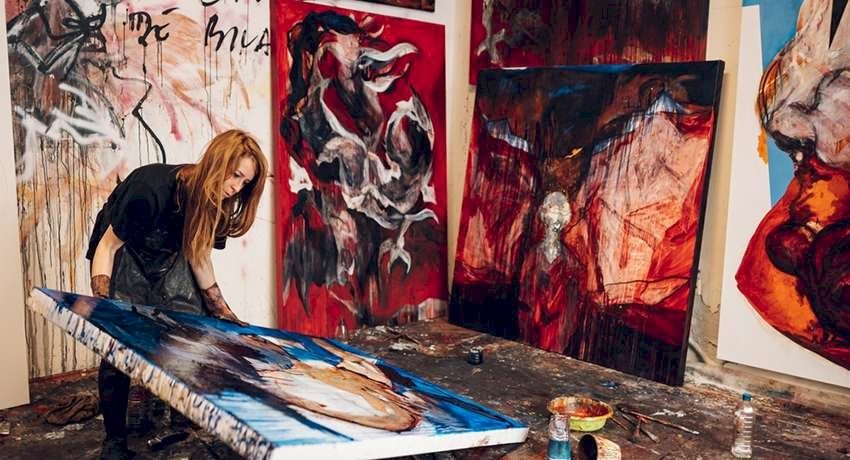
The Principles of Art in design are fundamental guidelines that artists and designers use to arrange visual elements in a composition. While the elements of art include the basic building blocks such as line, shape, color, texture, space, form, and value, the principles explain how these elements are organized and applied effectively. These principles help create balance, harmony, movement, emphasis, contrast, rhythm, pattern, unity, and proportion within an artwork or design. They are essential in making visual creations not only attractive but also meaningful and functional. Whether in painting, graphic design, architecture, fashion, or digital media, the principles of art guide creators in communicating ideas and emotions through visual structure.
One of the most important principles of art is balance. Balance refers to the distribution of visual weight in a composition. Just as physical objects need balance to remain stable, artwork needs visual balance to feel complete and comfortable to the viewer. Balance can be symmetrical, where both sides of a design mirror each other equally, creating a sense of formality and stability. It can also be asymmetrical, where different elements are arranged unevenly but still achieve equilibrium through contrast in size, color, or placement. Another type is radial balance, where elements radiate outward from a central point, often seen in mandalas or circular designs. Balance in art is crucial because it prevents a design from feeling too heavy or chaotic in one area.
Another key principle is contrast, which involves the use of differences to create visual interest and highlight important areas. Contrast can be achieved through variations in color, such as light versus dark, warm versus cool, or complementary colors. It can also appear in shapes, textures, sizes, or even typographic styles in graphic design. Contrast helps make certain elements stand out and adds drama and depth to an artwork. Without contrast, a design may appear flat, dull, or monotonous. Effective contrast guides the viewer’s attention and strengthens the overall impact of a composition.
Emphasis is the principle that refers to creating a focal point or center of interest in a design. Artists often want viewers to notice a particular part of an artwork first, such as a subject’s face in a portrait or a headline in a poster. Emphasis can be created using contrast, placement, size, color, or detail. For example, a bright red object in a mostly neutral painting will immediately attract attention. Emphasis helps establish hierarchy in design, ensuring that the most important information or visual element is noticed first. Without emphasis, the viewer may feel lost, unsure of where to look.
Movement is another essential principle that describes how a viewer’s eye travels through a composition. Movement is created by the arrangement of lines, shapes, colors, and forms that lead the eye from one part of the design to another. Artists use movement to guide viewers toward focal points and around the artwork in a deliberate way. Diagonal lines often suggest action and energy, while curved lines may create a smoother flow. Repetition of shapes or gradual changes in size can also suggest movement. Movement adds life and dynamism, making an artwork feel engaging rather than static.
Rhythm is closely related to movement and refers to the repetition of visual elements to create a sense of organized motion. Just as rhythm in music is created through repeated beats, rhythm in art is created through repeated patterns of shapes, colors, or lines. Rhythm can be regular, with consistent repetition, or it can be alternating, progressive, or random. This repetition creates visual harmony and helps unify the composition. Rhythm also contributes to the mood of a design, as smooth rhythms can feel calming while irregular rhythms can feel energetic or chaotic.
Pattern in art is another principle that involves repetition, but it focuses more on decorative consistency. Patterns occur when elements such as shapes, motifs, or textures repeat in a predictable manner. Patterns are widely used in textiles, wallpapers, architecture, and graphic backgrounds. They can be simple or complex, traditional or modern. Pattern adds richness and detail to a design and can also create a sense of unity. Artists often combine patterns with contrast or variation to avoid making the design feel overly repetitive or boring.
Unity is one of the most important principles because it refers to the sense of wholeness in a design. Unity occurs when all elements in a composition work together to create a cohesive and harmonious result. A unified artwork feels complete and organized, rather than scattered or disconnected. Unity can be achieved through consistent color schemes, repeated shapes, aligned elements, or thematic connections. However, unity must be balanced with variety, because too much sameness can make a design dull. Successful design finds harmony between unity and diversity.
Variety is the principle that adds interest and uniqueness to a composition. While unity brings together the elements, variety introduces differences that keep the viewer engaged. Variety can be achieved through contrasting colors, different shapes, varied textures, or changes in scale. It prevents artwork from becoming too predictable. Designers often use variety carefully so that the design remains cohesive while still offering visual excitement. Without variety, compositions may appear monotonous, but without unity, they may appear chaotic. Both principles must work together.
Proportion in art is the principle that refers to the relative size and scale of elements in a design. Proportion is important because it affects realism, harmony, and emphasis. In realistic art, correct proportion ensures that figures and objects appear natural. In design, proportion helps establish hierarchy, making certain elements larger or smaller depending on their importance. For example, in advertising, the product image may be larger than supporting text. Artists may also intentionally distort proportion for expressive or symbolic purposes, such as exaggerating features in caricatures or surrealism.
Scale is closely connected to proportion but focuses more on the size of an object in relation to the overall composition or the viewer. Large-scale elements often feel powerful and dominant, while smaller-scale elements may feel delicate or distant. Scale is often used to create depth, perspective, or emphasis. In architecture, scale is critical because buildings must relate to human size. In graphic design, scale helps guide attention and create balance. Manipulating scale can dramatically change the emotional and visual effect of a work.
Harmony is another essential principle that refers to the pleasing arrangement of elements. Harmony is achieved when the parts of a composition complement each other rather than clash. This does not mean everything must look the same, but rather that the differences work together smoothly. Harmony can be created through similar colors, repeated shapes, or consistent styles. A harmonious design feels calm and aesthetically satisfying. Artists often use harmony to create mood, whether peaceful, elegant, or joyful.
Alignment is especially important in modern graphic and digital design. Alignment refers to the placement of elements in relation to one another, ensuring they appear visually connected. Proper alignment creates order, clarity, and professionalism. When text, images, or shapes are aligned, the design becomes easier to understand and more visually appealing. Poor alignment can make a design appear messy or confusing. Alignment contributes strongly to unity and balance in composition.
Space is also considered a principle in design, particularly the use of positive and negative space. Positive space refers to the main subject or objects, while negative space is the empty area around them. Effective use of space helps avoid overcrowding and allows the viewer’s eye to rest. Negative space can also create hidden shapes or meanings, as seen in many clever logo designs. Space gives structure and breathing room, making compositions feel open, balanced, and clear.
The principle of repetition is another key idea in design. Repetition involves using the same elements multiple times to strengthen unity and consistency. For example, repeating colors, fonts, shapes, or design motifs can create a strong visual identity. Repetition is widely used in branding, where consistent logos and color schemes help audiences recognize a company. Repetition can also create rhythm and pattern, making the artwork more cohesive.
Finally, the principle of hierarchy is crucial in design communication. Hierarchy refers to the arrangement of elements according to their importance. Designers use hierarchy to ensure that viewers understand what to look at first, second, and last. Hierarchy can be created through size, color, contrast, placement, or typography. For example, in a magazine layout, headlines are large and bold, while body text is smaller. Hierarchy helps organize information and improves readability.
In conclusion, the Principles of Art in design are essential tools for creating effective and meaningful visual compositions. These principles—balance, contrast, emphasis, movement, rhythm, pattern, unity, variety, proportion, scale, harmony, alignment, space, repetition, and hierarchy—work together to shape how artwork is structured and perceived. Understanding and applying these principles allows artists and designers to communicate ideas clearly, evoke emotions, and produce visually engaging work. Whether designing a poster, painting a landscape, or creating a digital interface, these principles provide a foundation for artistic success and creative expression.
