

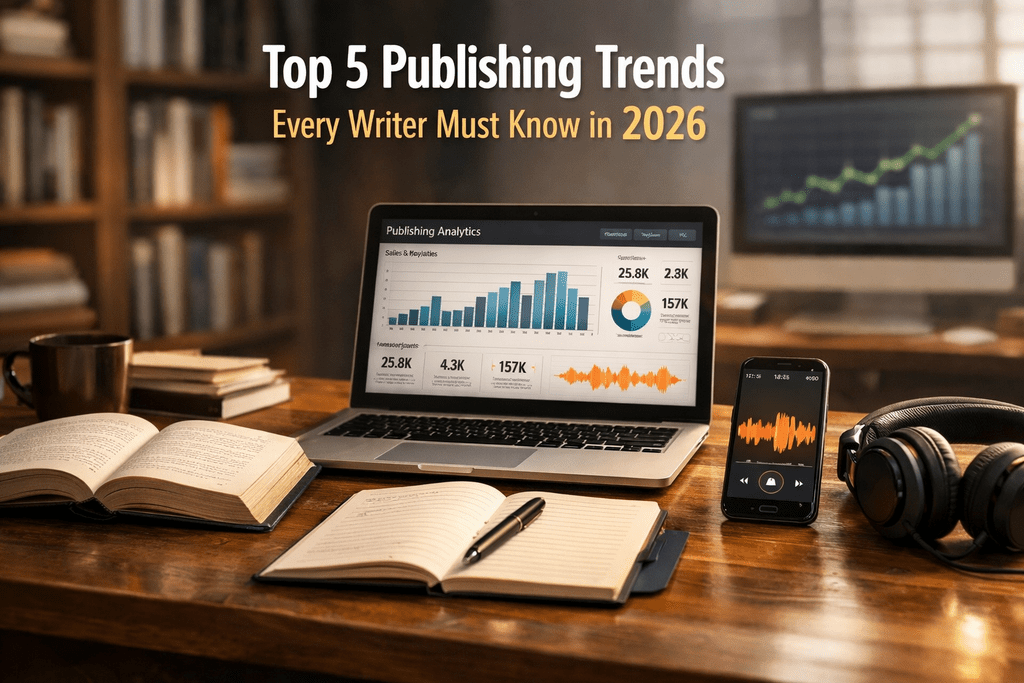
The publishing industry is changing faster than ever. New technology, shifting reader habits, and digital platforms are reshaping how books are written, published, and sold. For writers who want long-term success, staying updated with these changes is no longer optional.
In 2026, publishing is about more than finishing a manuscript. It is about using the right tools, choosing the best platforms, and building strong relationships with readers. In this guide, we will explore the top 5 publishing trends every writer must know in 2026 and how you can use them to grow your writing career.
Why Publishing Trends Matter in 2026
Understanding publishing trends helps writers make smarter decisions. It allows you to adapt to the market instead of struggling against it.
Industry Changes
Over the past few years, publishing has become more digital and author-focused. Self-publishing platforms have grown, audiobooks are booming, and readers now discover books through social media and online communities. Traditional publishing still exists, but writers have more options than ever before. Many authors also choose to partner with trusted service providers like Book Publishing Pro to help them publish professionally while keeping pace with these changes.
Technology has also made it easier to write, edit, and market books. These changes are creating new opportunities for writers who are willing to learn and adapt.
Risks of Falling Behind
Writers who ignore modern publishing trends often face low sales and limited visibility. Without understanding how readers find books in 2026, even well-written manuscripts can fail to reach an audience.
Falling behind can also mean missing out on new income streams, such as audiobooks, direct sales, and subscription platforms. Keeping up with trends helps protect your career and your income.
Trend #1: AI in Writing and Editing
Artificial intelligence is becoming a major part of the publishing process. In 2026, many writers are using AI tools to improve productivity and quality.
AI Writing Tools
AI tools now help writers with:
-
Generating outlines and ideas
-
Improving grammar and readability
-
Assisting with research
-
Speeding up early drafts
These tools do not replace creativity, but they help writers save time and reduce repetitive work.
Smart Use of AI
Using AI wisely is important. Writers should treat it as a support system, not a replacement. Always review and edit AI-generated content to maintain originality and voice.
Successful writers use AI to improve efficiency while keeping full control over their creative work.
Trend #2: Self-Publishing and Hybrid Models
Self-publishing continues to dominate the industry in 2026. More writers are choosing independence and full ownership of their work.
Independent Publishing
Independent publishing allows writers to:
-
Control pricing and royalties
-
Choose their own editors and designers
-
Sell directly to readers
-
Publish on their own schedule
This level of freedom helps authors build long-term businesses around their books.
Hybrid Publishing
Hybrid publishing combines traditional and self-publishing. Some authors work with publishers for certain books and self-publish others. This approach provides flexibility and multiple income streams.
Hybrid models are becoming popular among experienced writers who want both support and independence.
Trend #3: Growth of Audiobooks
Audiobooks are one of the fastest-growing segments in publishing. In 2026, many readers prefer listening over reading.
Why Audio Is Popular
Audiobooks fit modern lifestyles. People listen while driving, exercising, or working. Mobile devices and smart speakers have made audio content more accessible than ever.
Busy readers appreciate the convenience of listening to books on the go.
Narration Options
Writers now have two main options:
-
Human narration, which offers emotion and connection
-
AI narration, which is more affordable and faster
Both options have advantages. Many authors use human voices for premium projects and AI for budget-friendly releases.
Adding audiobooks helps writers reach new audiences and increase revenue.
Trend #4: Author Branding and Communities
In 2026, successful writers are more than just authors. They are personal brands with loyal audiences.
Building Your Brand
Author branding includes:
-
A professional website
-
Consistent visual style
-
Clear messaging
-
Active social media presence
Strong branding helps readers recognize and trust you across platforms.
Reader Engagement
Building a community is essential. Writers now focus on:
-
Email newsletters
-
Private groups
-
Social media interaction
-
Exclusive content
Engaged readers are more likely to buy future books, leave reviews, and recommend your work.
Trend #5: Data-Driven Marketing
Marketing in 2026 is based on data and analytics. Writers use numbers to guide their decisions instead of guessing.
Using Analytics
Modern authors track:
-
Sales performance
-
Reader demographics
-
Website traffic
-
Email open rates
-
Advertisement results
This data helps writers understand what works and what needs improvement.
Smarter Promotion
With analytics, writers can:
-
Target the right audience
-
Improve book launches
-
Adjust pricing
-
Optimize advertising campaigns
Data-driven marketing reduces wasted effort and increases return on investment.
How Writers Can Adapt in 2026
Adapting to publishing trends requires planning and commitment.
Learning New Skills
Writers should invest time in learning:
-
Basic marketing
-
Digital tools
-
Branding strategies
-
Platform management
Continuous learning keeps you competitive.
Building a Strategy
Create a clear publishing plan that includes:
-
Your goals
-
Publishing platforms
-
Budget
-
Marketing approach
-
Release schedule
A strong strategy prevents confusion and saves time.
Outsourcing Wisely
Many successful authors outsource tasks such as editing, design, and marketing. This allows them to focus on writing while maintaining high quality.
Choose experienced professionals and set clear expectations.
Common Publishing Mistakes
Even with good intentions, many writers make avoidable mistakes.
Chasing Trends
Not every new tool or platform is worth your time. Focus on trends that align with your goals and audience.
Ignoring Quality
Technology cannot replace strong writing. Poor editing and weak storytelling still hurt book sales.
Always prioritize quality.
Weak Marketing
Many writers stop promoting after launch. Consistent marketing is necessary for long-term success.
Build systems that support ongoing promotion.
Conclusion
The publishing industry in 2026 offers more opportunities than ever before. Writers who understand and apply modern trends can build sustainable and profitable careers.
The top 5 publishing trends every writer must know in 2026 include AI-powered tools, self-publishing and hybrid models, audiobook growth, author branding, and data-driven marketing. By embracing these changes, you position yourself for long-term success.
Stay informed, stay flexible, and keep improving. The future of publishing belongs to writers who are ready to evolve.
