

Introduction
The Next Generation Biometrics Market includes advanced biometric technologies that go beyond traditional fingerprint and facial recognition systems. These solutions leverage artificial intelligence, machine learning, behavioral analytics, and multimodal authentication to enhance identity verification and security. Next generation biometrics are increasingly deployed across government, banking, healthcare, enterprise, and consumer electronics applications to combat fraud, improve user experience, and strengthen digital security frameworks.
Market Size and Growth Projections
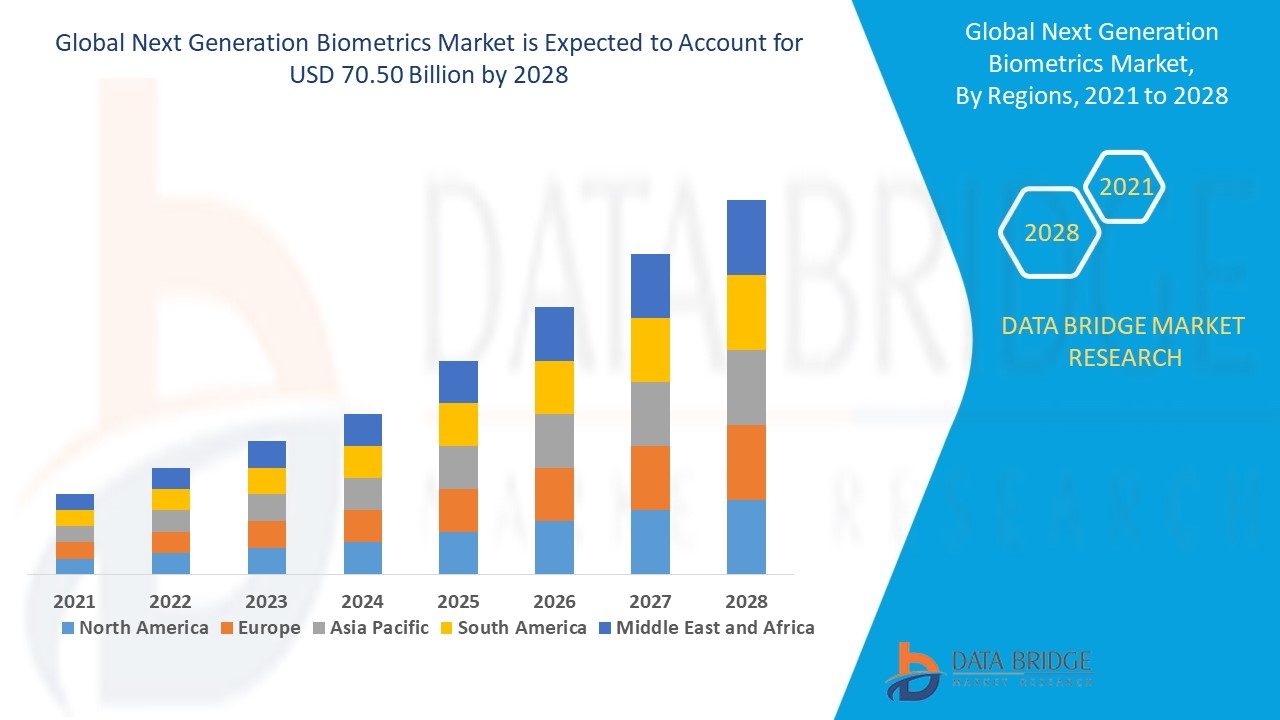
The next generation biometrics market has experienced rapid growth and is expected to expand at a strong compound annual growth rate over the forecast period. Market growth is driven by rising cybersecurity threats, increased digital transactions, and growing demand for frictionless authentication solutions. Widespread adoption of cloud services, mobile devices, and digital identity platforms further supports sustained market expansion.
Get More Details : https://www.databridgemarketresearch.com/reports/global-next-generation-biometrics-market
Key Growth Factors
-
Rising need for advanced identity verification and fraud prevention
-
Integration of AI and machine learning in biometric systems
-
Growth of digital payments and online services
-
Increasing adoption of multimodal and contactless authentication
-
Government initiatives supporting digital identity programs
Market Segmentation
By Technology
-
Facial Recognition
-
Iris Recognition
-
Voice Recognition
-
Behavioral Biometrics
-
Vein Recognition
-
Multimodal Biometrics
Multimodal and behavioral biometric technologies are gaining strong traction due to higher accuracy, continuous authentication capabilities, and reduced spoofing risks.
By Component
-
Hardware
-
Software
-
Services
Software solutions dominate the market as AI-driven algorithms, cloud-based platforms, and analytics play a central role in next generation biometric systems.
By Deployment Mode
-
On-Premise
-
Cloud-Based
Cloud-based biometric solutions are witnessing rapid adoption due to scalability, remote access, and ease of integration with digital platforms.
By End User
-
Government & Defense
-
Banking, Financial Services, and Insurance
-
Healthcare
-
Retail & E-commerce
-
Enterprise & IT
-
Consumer Electronics
BFSI and government sectors lead adoption due to high security requirements and large-scale identity management needs.
Regional Insights
North America leads the next generation biometrics market due to early technology adoption, strong cybersecurity investments, and presence of key solution providers. Europe shows steady growth driven by digital identity initiatives and security regulations. Asia-Pacific is emerging as a high-growth region supported by expanding mobile adoption, smart city projects, and government-led digital transformation programs.
Key Market Drivers
The market is driven by the increasing complexity of cyber threats and the need for secure, user-friendly authentication mechanisms. Next generation biometrics offer enhanced accuracy, reduced fraud, and seamless user experiences compared to traditional methods. Integration with AI enables adaptive learning, continuous authentication, and improved decision-making across security applications.
Market Challenges and Restraints
Challenges include data privacy concerns, regulatory compliance requirements, and potential bias in biometric algorithms. High implementation costs and system integration complexity may limit adoption among smaller organizations. Ensuring ethical use and transparency in biometric data handling remains a critical consideration for market participants.
Competitive Landscape with Key Companies
-
Thales Group
-
NEC Corporation
-
IDEMIA
-
BioID
-
Nuance Communications
-
Suprema
-
HID Global
-
Onfido
Companies focus on AI-powered biometrics, cloud-native platforms, enhanced data protection, and partnerships with governments and enterprises to expand market reach.
Technological Innovations
Technological advancements include AI-driven behavioral biometrics, continuous authentication systems, and liveness detection technologies. Development of privacy-preserving biometrics, edge-based processing, and decentralized identity solutions is reshaping the market. Integration with blockchain and zero-trust security frameworks further enhances biometric system security.
SWOT Analysis
| Strengths | Weaknesses |
|---|---|
| High authentication accuracy | Data privacy and ethical concerns |
| Enhanced user convenience | Regulatory complexity |
| Reduced fraud and identity theft | High implementation costs |
| Opportunities | Threats |
|---|---|
| Growth in digital identity ecosystems | Cyberattacks targeting biometric databases |
| Expansion in mobile and cloud services | Public resistance to biometric usage |
| Adoption in emerging markets | Rapid technological obsolescence |
Future Market Outlook
The next generation biometrics market is expected to witness strong growth as digital ecosystems expand and security requirements intensify. Increased adoption of multimodal biometrics, AI-driven analytics, and privacy-centric architectures will drive market evolution. Regulatory clarity, ethical frameworks, and continuous innovation will be critical for long-term market sustainability.
Conclusion
The Next Generation Biometrics Market is redefining identity verification and digital security through advanced technologies and intelligent authentication models. As organizations prioritize secure and seamless user experiences, next generation biometric solutions will become integral to digital transformation strategies. Continued innovation, responsible data management, and cross-industry adoption will shape the future of the market.
