

Introduction
Digital technologies have transformed how people live, work, and communicate. From online banking and cloud storage to smart devices and remote workplaces, the digital ecosystem is deeply embedded in everyday life. However, this rapid digital expansion has also increased exposure to cyber risks. As a result, the cybersecurity market has emerged as one of the most critical sectors supporting global digital trust and stability.
Cybersecurity is no longer a concern limited to technology teams. Individuals, small businesses, large enterprises, and governments all face growing threats from cybercriminals. The rising frequency of data breaches, ransomware attacks, and identity theft incidents has accelerated the need for advanced security solutions. This shift has positioned the cybersecurity market as a foundational pillar of the modern digital economy.
Market Overview
The cybersecurity market focuses on protecting systems, networks, devices, and data from unauthorized access, cyberattacks, and digital disruptions. It includes a wide range of solutions such as network security, cloud security, application security, endpoint protection, identity and access management, and data security.
As organizations increasingly rely on digital infrastructure, cybersecurity spending continues to grow. Companies are moving beyond basic protection tools toward integrated security platforms that offer real-time threat detection, automated response, and continuous monitoring. The market serves diverse industries including finance, healthcare, manufacturing, retail, education, and government.
Key Market Drivers
One of the primary drivers of the cybersecurity market is the rapid increase in cyber threats. Attackers are using more sophisticated methods, making traditional security tools less effective. Ransomware, phishing, and supply chain attacks have become more targeted and damaging.
Another major driver is digital transformation. Cloud adoption, remote work models, and the use of Internet-connected devices have expanded the attack surface. Each new connection introduces potential vulnerabilities, pushing organizations to invest in stronger cybersecurity frameworks.
Regulatory compliance also plays a critical role. Governments across the world are enforcing stricter data protection laws, compelling organizations to implement robust security measures to avoid penalties and reputational damage.
Market Segmentation
The cybersecurity market is segmented based on solution type, deployment model, organization size, and end-user industry.
By solution type, the market includes network security, endpoint security, cloud security, application security, data protection, and identity management. Network and cloud security solutions hold a significant share due to widespread cloud adoption.
Based on deployment, solutions are offered through on-premises and cloud-based models. Cloud-based cybersecurity solutions are gaining popularity due to scalability, flexibility, and cost efficiency.
In terms of organization size, both large enterprises and small and medium-sized businesses contribute to market growth. While large enterprises invest in comprehensive security systems, smaller businesses are increasingly adopting cybersecurity solutions as cyberattacks target them more frequently.
Role of Artificial Intelligence in Cybersecurity
Artificial intelligence is playing a transformative role in the cybersecurity market. Traditional security systems often struggle to keep up with the volume and complexity of modern cyber threats. Artificial intelligence helps address this challenge by analyzing massive datasets and identifying patterns that indicate potential risks.
Machine learning algorithms enable faster threat detection and reduce response times. Artificial intelligence-driven systems can predict attacks, automate incident responses, and continuously improve defense strategies. These capabilities are particularly valuable in protecting cloud environments and large enterprise networks.
As cyberattacks become more automated, the integration of artificial intelligence into cybersecurity solutions is becoming essential for maintaining strong digital defenses.
Industry Trends
One of the most notable trends in the cybersecurity market is the shift toward zero-trust security models. Instead of assuming trust within a network, zero-trust approaches require continuous verification of users and devices.
Another key trend is the rise of managed security services. Many organizations lack in-house expertise and are turning to third-party providers for continuous monitoring and threat management.
The adoption of cloud-native security tools is also increasing. As businesses migrate workloads to the cloud, demand for security solutions designed specifically for cloud environments continues to grow.
Regional Market Insights
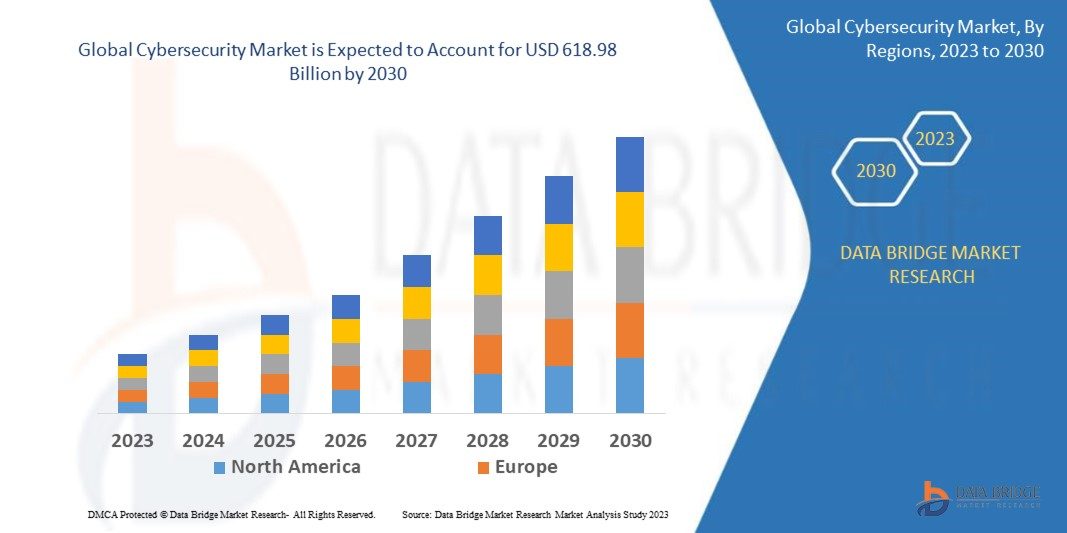
North America leads the cybersecurity market due to high digital adoption and strong regulatory frameworks. The presence of major technology providers and high awareness levels further support market growth in this region.
Europe follows closely, driven by strict data protection regulations and increasing cybersecurity investments across industries.
The Asia-Pacific region is experiencing rapid growth due to expanding digital infrastructure, rising internet penetration, and increased cybersecurity awareness among businesses and governments.
Emerging economies are also recognizing the importance of cybersecurity as digital services become more widespread.
Competitive Landscape
The cybersecurity market is highly competitive, with a mix of established technology companies and innovative startups. Major players focus on product innovation, strategic partnerships, and acquisitions to expand their market presence.
Companies are increasingly offering integrated security platforms that combine multiple protection layers into a single solution. This approach helps organizations simplify security management while improving overall protection.
Competition is also driving advancements in artificial intelligence-based security tools and automation capabilities.
Challenges in the Market
Despite strong growth, the cybersecurity market faces several challenges. One major issue is the shortage of skilled cybersecurity professionals. This talent gap makes it difficult for organizations to implement and manage advanced security systems.
Another challenge is the constantly evolving nature of cyber threats. Attackers adapt quickly, requiring continuous updates and innovation in security solutions.
Cost constraints can also limit adoption, particularly for smaller organizations with limited budgets.
Future Outlook
The future of the cybersecurity market remains highly promising. As digitalization accelerates, cybersecurity will become an essential component of every organization’s strategy. Investment in artificial intelligence, automation, and predictive security technologies is expected to increase.
Cybersecurity will shift from being a reactive function to a proactive and strategic priority. Trust, resilience, and data protection will define the next phase of market growth.
Source: https://www.databridgemarketresearch.com/reports/global-cybersecurity-market
Conclusion
The cybersecurity market has become a cornerstone of the digital world. With rising cyber threats, expanding digital ecosystems, and increasing regulatory pressure, demand for robust cybersecurity solutions continues to grow. As technology evolves, cybersecurity will remain essential in safeguarding data, systems, and digital trust across all industries.
Frequently Asked Questions
1. Why is the cybersecurity market growing so rapidly?
The market is growing due to increasing cyber threats, digital transformation, and stricter data protection regulations.
2. Who uses cybersecurity solutions?
Individuals, small businesses, large enterprises, governments, and institutions across all industries use cybersecurity solutions.
3. How does artificial intelligence improve cybersecurity?
Artificial intelligence enables faster threat detection, automated responses, and predictive security capabilities.
4. Are small businesses at risk from cyberattacks?
Yes, small businesses are frequent targets and increasingly investing in cybersecurity solutions.
5. What is the future of the cybersecurity market?
The market will continue to expand, focusing on proactive security, automation, and digital trust.
