

Education is about learning, yet sometimes the way we measure learning feels arbitrary. No system is perfect, and the American grading system is no exception. Ever wondered why an A matters so much in America? Or why a GPA can define your college future? Let’s explore not just what the grading system is, but how it shapes student thinking, motivation, and opportunity.
What Is the American Grading System?
At its core, the American grading system evaluates student performance using letter grades — typically from A to F — in combination with a numerical metric called the Grade Point Average (GPA).
This sounds simple, but understanding this system requires unpacking both the symbolism of letter grades and the practical outcomes they create.
Letter Grades: More Than Just Letters
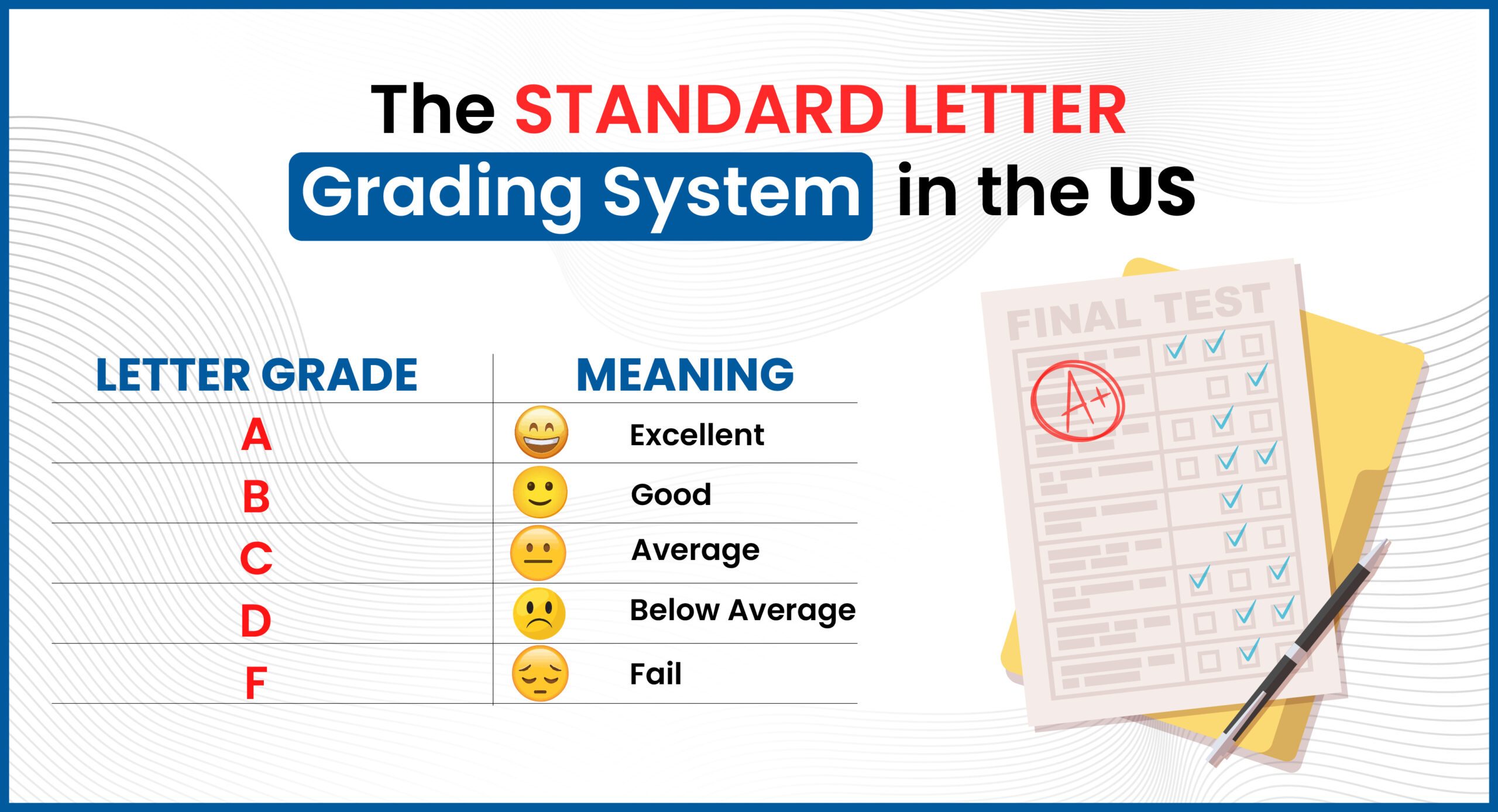
In most U.S. schools and universities, grades are assigned as letters with plus and minus distinctions. For example:
-
A is excellent
-
B is above average
-
C indicates satisfactory work
-
D is the lowest passing grade
-
F means failure
The full range often includes A+, A, A-, B+, B, B-, C+ and so on, down to F, reflecting nuanced performance levels.
GPA: A Number That Travels With You
Each letter grade converts to a numerical value on a scale most commonly from 0.0 to 4.0. This becomes the Grade Point Average (GPA) — a cumulative measure of your academic performance across terms and years.
At many institutions, this might look like:
-
A equates to 4.0
-
A- is around 3.67
-
B+ is around 3.33
-
B is 3.0
-
down to F which is 0.0
These numbers are added up over all your classes and averaged based on credit hours to determine your GPA.
How the System Actually Works
Assessment Beyond Final Exams
Unlike some education systems that rely heavily on a single final exam, the U.S. grading culture often includes:
-
Class participation
-
Homework or assignments
-
Quizzes and midterms
-
Group projects
-
Final exams
This holistic approach rewards consistent effort and participation.
So if you struggle with one test but excel in classroom engagement and assignments, your overall grade can still be strong.
Weighted vs. Unweighted GPA
In American high schools, you might see two types of GPA:
-
Unweighted GPA: The standard 0.0 to 4.0 scale.
-
Weighted GPA: Honors, Advanced Placement (AP), or International Baccalaureate (IB) courses count extra, sometimes going above 4.0.
For instance, getting an ‘A’ in an AP course may count as above a 4.0. This rewards students for tackling more challenging coursework.
Practical Implications: What This Means for You
GPA Shapes Opportunities
Your GPA affects more than your transcript. It plays a big role in:
-
College admissions
-
Scholarship eligibility
-
Internship and job prospects
-
Graduate school options
Students quickly realize that improving a GPA can multiply opportunities later in life.
Different Standards Across Schools
There’s no single “American” formula. Different universities — and even different departments within the same university — may define grade boundaries and GPA ceilings slightly differently. Some colleges even interpret an A+ as worth the same as a regular A, while others give it extra value.
This creates variability but also flexibility. For example, a GPA you earned at one school may be interpreted uniquely during transfer or when applying to graduate programs.
Stories From the Classroom
Imagine two students. One consistently participates in class, collaborates with classmates, and seeks feedback. The other focuses on memorizing facts to ace final exams.
In the American grading system, the first student may consistently outperform the second in terms of GPA — because the system values regular engagement and diverse assessments alongside exam results. Many international students find this surprising when they first enter U.S. classrooms.
Another story comes from the reality of grade inflation — a growing trend where higher grades are awarded over time without a corresponding increase in learning. Some elite universities now award a majority of A’s, creating a situation where students with very different mastery levels have similar GPAs. This has sparked national debates about whether grades still mean what they used to.
Why the System Evolved This Way
The American grading system grew out of a desire to quantify student achievement in a way that’s simple to compare and understand. But real learning is complex, and compressing it into a letter or number doesn’t capture everything.
Still, the system persists because it’s widely used for key decisions — from academic honors to federal financial aid eligibility. For many students, GPA becomes a language of competency that colleges, employers, and scholarship boards understand.
Common Misconceptions
An ‘A’ Equals Perfect Understanding
Not necessarily. An ‘A’ often signifies high performance on listed criteria, but it may not reflect deep mastery or long-term retention of concepts.
GPA Predicts Future Success
GPA is an important marker, but research and real-world outcomes show that grades alone don’t always predict performance in careers or life. Soft skills, adaptability, and critical thinking matter just as much.
All Schools Use the Same Scale
No. Some schools have no plus or minus grades. Others use alternative evaluations like narrative feedback, pass/fail options, or portfolio assessments.
This variation reflects the system’s flexibility — and sometimes its inconsistency.
Framework for Students: How to Think About Grading
Here’s a practical mindset for navigating the American grading system:
Focus on Growth Over Grades
Grades are outputs, but learning is the process. Approach courses with curiosity and resilience. Aim to understand rather than score.
Understand Credit Hours
Courses carry different credit weights. A GPA is a weighted average. Boosting grades in higher-credit courses influences your overall GPA more than in electives.
Balance Challenge and Performance
Taking challenging classes can raise your GPA ceiling if you perform well, especially in weighted systems. But overloading too much can hurt performance overall.
Holistic Performance Matters
Regular work, meaningful participation, and engagement outside exams all contribute to a stronger academic profile.
Looking Ahead: The Future of Grading
There’s emerging debate about reforming or even eliminating traditional letter grades in favor of assessment methods that emphasize growth, mastery, and student agency. Some colleges and programs already experiment with narrative evaluations, competency-based assessments, or learning portfolios.
Such changes aim to keep the benefits of clear evaluation while reducing stress and superficial competition.
This movement suggests that while grades will remain influential, how we think about them may evolve to reflect deeper learning.
Conclusion: A Tool, Not a Verdict
The American grading system is a framework — not a measure of worth. It creates structure and comparability, but it also carries limitations and pressures. By understanding how it works and why it matters, students can use the system strategically without letting it define their potential.
Grades open doors, but learning opens minds.
