

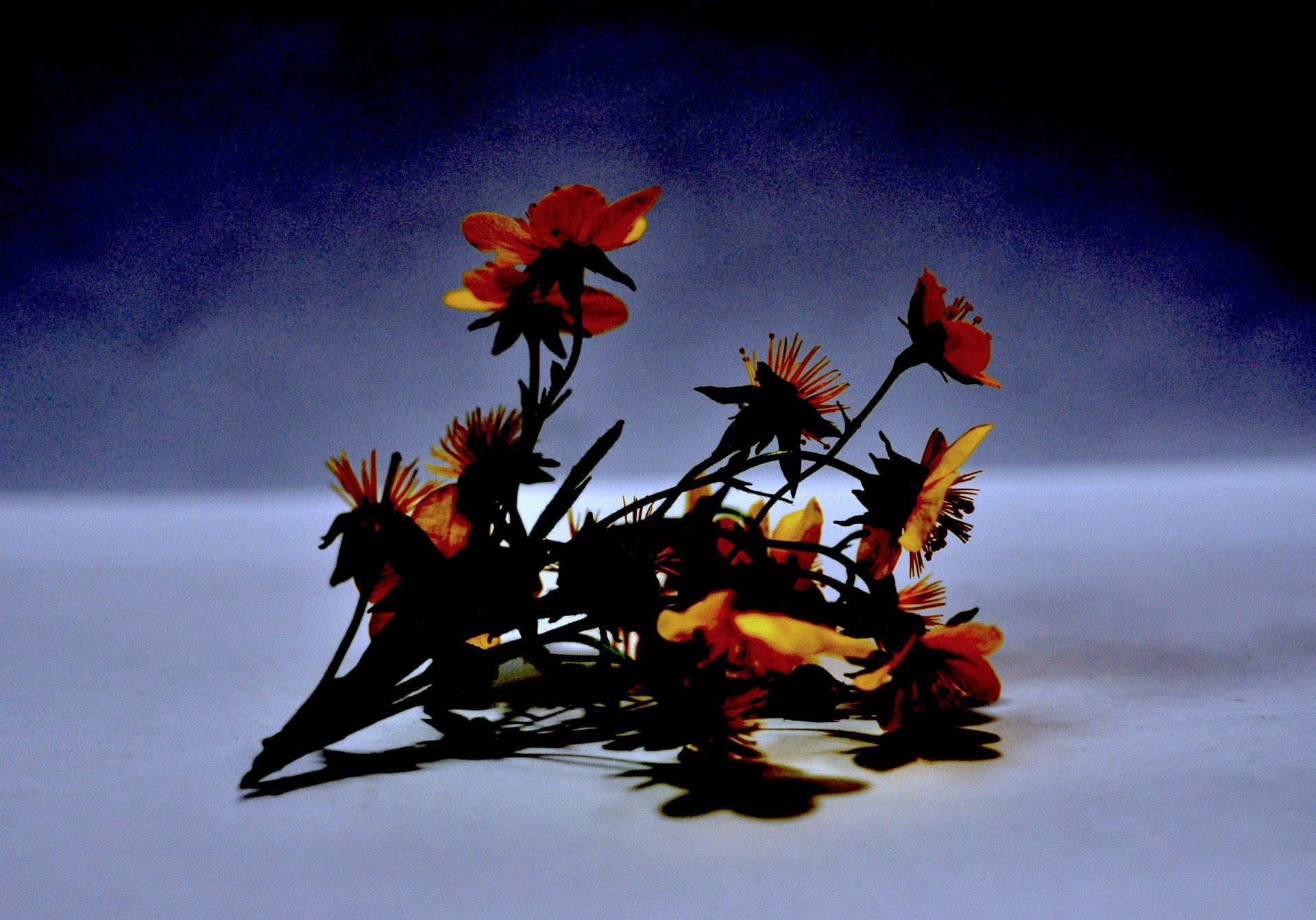
Contemporary floral surrealist art is a vibrant and evocative artistic movement that blends the symbolic richness of flowers with the dreamlike, irrational, and imaginative qualities of surrealism. Rooted in the early 20th-century surrealist movement pioneered by artists such as Salvador Dalí, Max Ernst, and René Magritte, contemporary floral surrealism reinterprets those foundational ideas through a modern lens. Flowers, long associated with beauty, fragility, fertility, love, death, and rebirth, become powerful visual metaphors when placed in surreal contexts. In contemporary practice, artists use floral imagery not merely for aesthetic pleasure but as a conceptual tool to explore identity, psychology, politics, environmental concerns, and cultural narratives. This genre stands at the intersection of tradition and innovation, merging classical symbolism with digital tools, mixed media, and globalized perspectives.
At its core, contemporary floral surrealist art challenges the viewer’s perception of reality. Flowers are often depicted in impossible scales, hybridized with human anatomy, suspended in dreamlike landscapes, or emerging from unexpected objects. These distortions disrupt logical interpretation and invite emotional or subconscious responses. Unlike traditional botanical art, which emphasizes scientific accuracy and visual documentation, floral surrealism prioritizes emotional truth and symbolic meaning. The flower becomes a vessel for inner states of mind—desire, anxiety, memory, trauma, or hope—transforming a familiar natural element into something uncanny and psychologically charged. This tension between the recognizable and the strange is central to the surrealist experience.
The evolution of floral surrealism in contemporary art is closely tied to shifts in cultural and artistic values. While early surrealists were deeply influenced by Freudian psychoanalysis and the exploration of the unconscious mind, contemporary artists expand this framework to include postmodern theories, feminist discourse, postcolonial identity, and ecological awareness. Flowers, historically coded as feminine and decorative, are reclaimed and recontextualized to challenge gender norms and power structures. By exaggerating, fragmenting, or mutating floral forms, artists critique the way beauty, nature, and femininity have been idealized, commodified, or controlled in various cultures.
One of the defining characteristics of contemporary floral surrealist art is its interdisciplinary nature. Artists work across painting, photography, sculpture, digital illustration, installation, fashion, and even performance art. Digital technology, in particular, has played a significant role in shaping the movement. High-resolution photography, 3D modeling, and AI-assisted design allow artists to create hyper-real floral forms that blur the boundaries between the organic and the artificial. These digitally constructed flowers often appear more vivid and perfect than real ones, raising questions about authenticity, artificial beauty, and humanity’s increasingly mediated relationship with nature. In this sense, contemporary floral surrealism reflects the visual language of the digital age while retaining the emotional depth of traditional art forms.
Culturally, flowers carry diverse meanings across societies, and contemporary floral surrealist artists frequently draw on these cross-cultural associations. In many Eastern traditions, flowers such as the lotus, cherry blossom, and chrysanthemum symbolize spiritual awakening, impermanence, or honor. In Western art history, roses have been linked to love and martyrdom, lilies to purity and death, and sunflowers to vitality and devotion. Contemporary artists weave these symbolic histories into surreal compositions, creating layered narratives that resonate with global audiences. By juxtaposing cultural symbols in unexpected ways, floral surrealist art becomes a site of intercultural dialogue, reflecting the interconnected and hybrid nature of contemporary society.
The psychological dimension of contemporary floral surrealism is particularly significant. Flowers often function as extensions of the human body or psyche, merging petals with skin, roots with veins, or blossoms with eyes and mouths. These hybrid forms evoke themes of transformation, vulnerability, and interconnectedness between humans and nature. Such imagery can be both beautiful and unsettling, mirroring the complexity of human emotions. The surreal manipulation of floral forms allows artists to visualize internal experiences that are difficult to articulate through words, making this genre especially powerful in addressing mental health, trauma, and personal identity in a visually poetic manner.
Environmental concerns are another major cultural context influencing contemporary floral surrealist art. In an era marked by climate change, biodiversity loss, and ecological crisis, flowers become symbols of both natural beauty and environmental fragility. Some artists depict decaying, melting, or genetically altered flowers to comment on pollution, industrialization, and the consequences of human intervention in natural systems. Others imagine fantastical floral worlds as utopian alternatives, suggesting harmony between humans and nature. Through surreal exaggeration, artists highlight ecological issues in ways that are emotionally resonant rather than purely didactic, encouraging viewers to reflect on their relationship with the natural world.
The feminist reinterpretation of floral imagery is a crucial aspect of contemporary floral surrealist art. Historically, floral motifs were often dismissed as decorative or minor, particularly when associated with women artists. Contemporary practitioners challenge this marginalization by using flowers as symbols of strength, resilience, sexuality, and autonomy. By merging floral forms with female bodies or presenting flowers as dominant, expansive, and even aggressive, artists subvert traditional associations of passivity and delicacy. This reimagining of floral symbolism aligns with broader feminist efforts to reclaim visual language and redefine representations of femininity in art and culture.
Contemporary floral surrealist art also engages deeply with themes of identity and self-representation. In a globalized world where individuals navigate multiple cultural, social, and personal identities, flowers serve as flexible metaphors for growth, hybridity, and transformation. Artists from diasporic or marginalized backgrounds often use surreal floral imagery to express feelings of displacement, memory, and belonging. Roots, seeds, and blooming processes become symbolic of ancestry, migration, and personal evolution. Through surreal abstraction, these artists create visual narratives that transcend linguistic and cultural barriers, allowing for a more inclusive form of storytelling.
The influence of fashion, design, and popular culture on contemporary floral surrealism cannot be overlooked. Floral surrealist aesthetics frequently appear in haute couture, album covers, editorial photography, and digital media. Designers and visual artists collaborate to produce immersive worlds where flowers dominate the visual field in exaggerated and fantastical ways. This crossover between fine art and commercial culture reflects the porous boundaries of contemporary creative practice. While some critics argue that this risks commodifying surrealist imagery, others see it as a democratization of art, bringing complex visual ideas into everyday cultural consumption.
Historically, surrealism sought to disrupt rational thought and challenge bourgeois norms, and contemporary floral surrealist art continues this legacy in subtle but impactful ways. By transforming something as universally familiar as a flower into a symbol of psychological depth or social critique, artists invite viewers to question their assumptions about beauty, nature, and meaning. The surreal use of floral imagery destabilizes conventional aesthetics and encourages a more intuitive, emotional mode of engagement with art. This aligns with contemporary cultural shifts that value subjective experience, emotional intelligence, and multiplicity of perspectives.
The cultural significance of contemporary floral surrealist art also lies in its accessibility and emotional immediacy. Flowers are universally recognizable, making the imagery approachable even for viewers without formal art education. However, the surreal treatment of these forms adds layers of complexity that reward deeper contemplation. This balance between familiarity and abstraction allows the genre to communicate across cultural and social boundaries. In a fragmented and fast-paced world, such art offers moments of pause, introspection, and imaginative escape.
From a philosophical perspective, contemporary floral surrealism reflects humanity’s ongoing struggle to reconcile reason and imagination, control and chaos, technology and nature. Flowers, governed by biological processes yet admired for their unpredictable beauty, embody this duality. When rendered surrealistically, they become symbols of uncertainty and possibility, reminding viewers that reality is not fixed but shaped by perception, emotion, and cultural context. This philosophical undercurrent gives the genre lasting relevance in an age marked by rapid change and existential questioning.
Education and academic discourse increasingly recognize the importance of contemporary floral surrealist art in understanding visual culture. Art historians and theorists examine how this genre reworks historical symbolism while responding to contemporary issues such as gender politics, environmental ethics, and digital identity. Museums and galleries worldwide feature floral surrealist works in exhibitions that explore nature, imagination, and the subconscious, further cementing the movement’s cultural legitimacy. These institutional acknowledgments highlight the genre’s role in shaping contemporary artistic dialogue.
In conclusion, contemporary floral surrealist art is far more than a decorative or stylistic trend. It is a rich and multifaceted mode of expression that uses the symbolic power of flowers to explore complex psychological, cultural, and environmental themes. By merging the dream logic of surrealism with modern concerns and technologies, artists create works that resonate deeply with contemporary audiences. The cultural significance of this genre lies in its ability to transform the ordinary into the extraordinary, inviting viewers to see the world—and themselves—through a more imaginative, critical, and emotionally engaged lens. As society continues to grapple with questions of identity, sustainability, and meaning, contemporary floral surrealist art remains a compelling and relevant form of visual storytelling.
