

1. Introduction
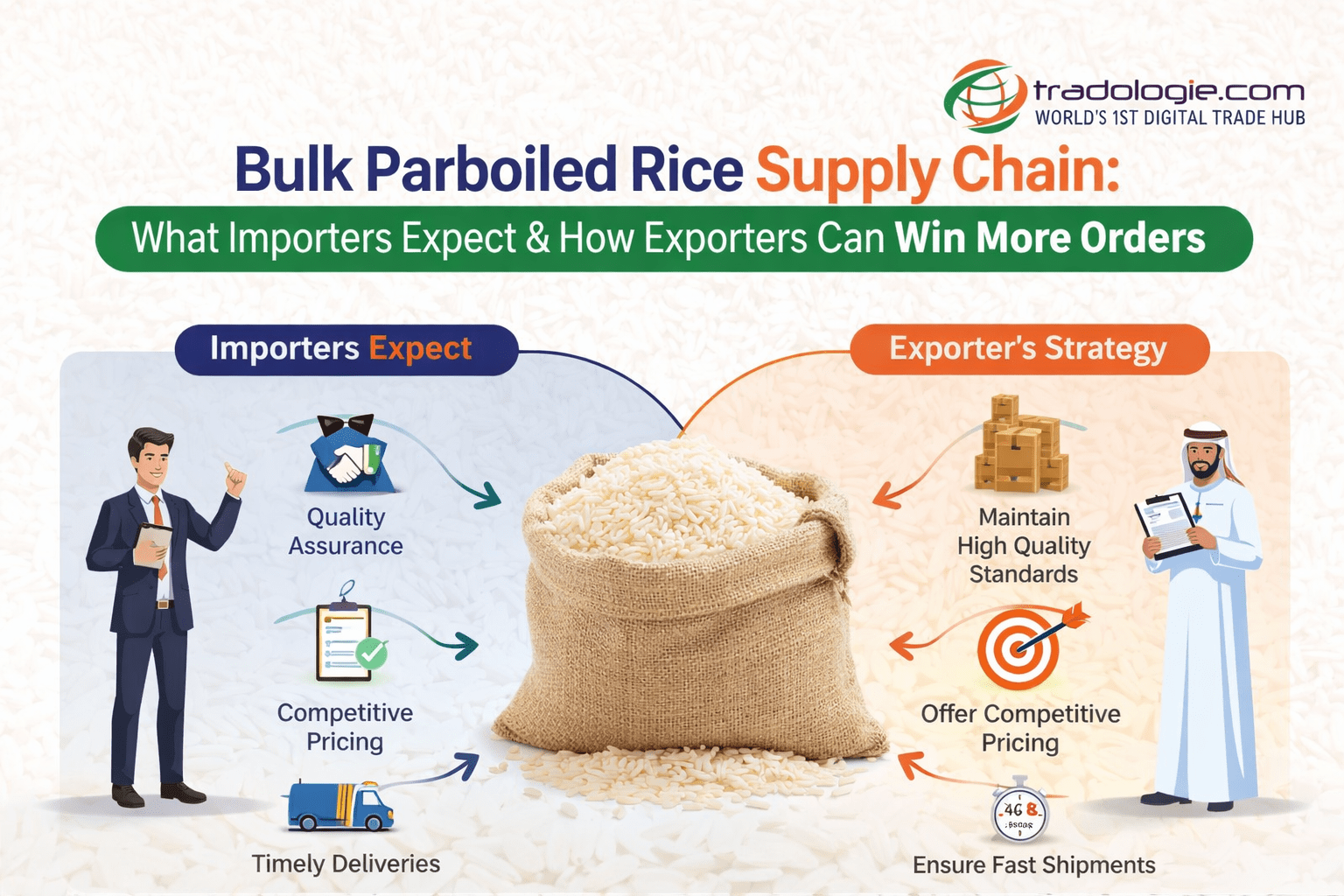
The actual movement of Parboiled Rice is only the outward manifestation of a much deeper agreement built on dependability and risk management in the high-stakes world of bulk commodity trading. The supply chain’s resilience is what seals the deal, even though price frequently starts the conversation. A shipment is more than just inventory for importers, especially in import-dependent areas like the Middle East and West Africa.
It is a commitment to downstream retailers and customers who expect consistency. Finding a buyer is no longer as difficult for exporters as proving the operational sophistication needed to carry out intricate logistical manoeuvres flawlessly. The ability to close the gap between promise and delivery is what defines success in this industry.
2. The Importer’s Checklist: Defining Reliability
For volume buyers, the lowest price is often a false economy if the supply chain fractures. Importers operate on tight margins and tighter schedules; thus, their definition of value is heavily weighted toward predictability.
- Consistency of Quality (The “First vs. Fifth” Rule):
- Expectation: It is common for sellers to send a pristine “golden sample” or a high-quality first container. Importers verify exporters based on whether the fifth or tenth container matches the specifications of the first.
- The Risk: Variability in the degree of parboiling (creaminess vs. golden) or inconsistent grain lengths (e.g., mixing IR-64 Rice with shorter grains) can damage a buyer’s brand reputation in their local market.
- Supply Continuity:
- Expectation: Buyers look for suppliers who have secured procurement networks with millers, ensuring that they can fulfil contracts even during the lean season when paddy availability tightens.
- Market Reality: An exporter who defaults on a contract due to local price hikes is rarely given a second chance.
3. Logistics as a Value Differentiator
The journey from a mill in India or Thailand to a port in Benin or Saudi Arabia involves multiple friction points. Mastering these is how sellers distinguish themselves from mere traders.
- Loading Efficiency:
- Optimisation: Maximising the payload—typically 26 to 27 Metric Tons per 20-foot container depending on the destination’s road weight limits—crucially lowers the per-unit landed cost.
- Damage Prevention: Buyers expect exporters to use high-quality liners and desiccants (moisture absorbers) to prevent “container rain” or condensation, which is the leading cause of mould and caking in parboiled rice during transit.
- Documentation Precision:
- The Bottleneck: A delay in receiving the original Bill of Lading (BL) or a mismatch in the Phyto-Sanitary Certificate can cause goods to sit at the destination port, accruing massive demurrage and detention charges.
- Requirement: Parboiled Rice Buyers prioritise sellers who offer digital drafts of documents for approval before the vessel sails, ensuring a seamless customs clearance process.
4. Meeting Technical Expectations: The “Unspoken” Contract
Beyond the visual appeal of the grain, the technical parameters of the supply chain are non-negotiable for serious B2B engagements.
- Third-Party Verification:
- The Standard: Trust is good, but inspection is better. Importers increasingly demand inspection certificates from reputable agencies (like SGS, Bureau Veritas, or Cotecna) at the loading port.
- Scope: This must cover not just weight and quantity but specific quality parameters: average grain length (AGL), percentage of broken grains, and damaged/discoloured grains.
- Packaging Integrity:
- Durability: Whether it is a 50 kg PP bag for wholesalers or a 5 kg BOPP bag for retail, the packaging must withstand rough handling at transshipment points. A burst bag is essentially lost revenue and a cleanup liability for the buyer.
5. Strategies for Exporters: How to Win More Orders
For Parboiled Rice Sellers looking to expand their footprint, the goal is to reduce the buyer’s perceived risk. In a market flooded with offers, credibility is the currency.
- Transparency in “Force Majeure”:
- Communication: Markets fluctuate. If freight rates spike due to canal blockages or if export duties change, proactive communication is valued over silence. Buyers are often willing to renegotiate terms if informed early, rather than being surprised by a default.
- Digital Verification & Visibility:
- The New Standard: Just as in general trade, buyers vetted on digital agri-commodity platforms are more likely to engage. Sellers must showcase their valid export licences (IEC), RCMC from export councils (like APEDA), and a verifiable history of past shipments.
- Detailed Listings: Instead of generic offers, winning exporters list specific inventory details—milling dates, crop year, and high-resolution images of the actual stock—to move the conversation from “What do you have?” to “When can you ship?”
6. Conclusion
A transparent, data-driven supply chain is replacing opaque, handshake agreements in the bulk parboiled rice trade. Building relationships with exporters who view logistics as a core competency has replaced spot-buying as the importer’s top priority. Operational excellence, or consistently delivering the correct grade in the right bag with the right paperwork, presents an opportunity for the exporter. Consistency is the main source of recurring revenue in this ecosystem, not just a metric.
