

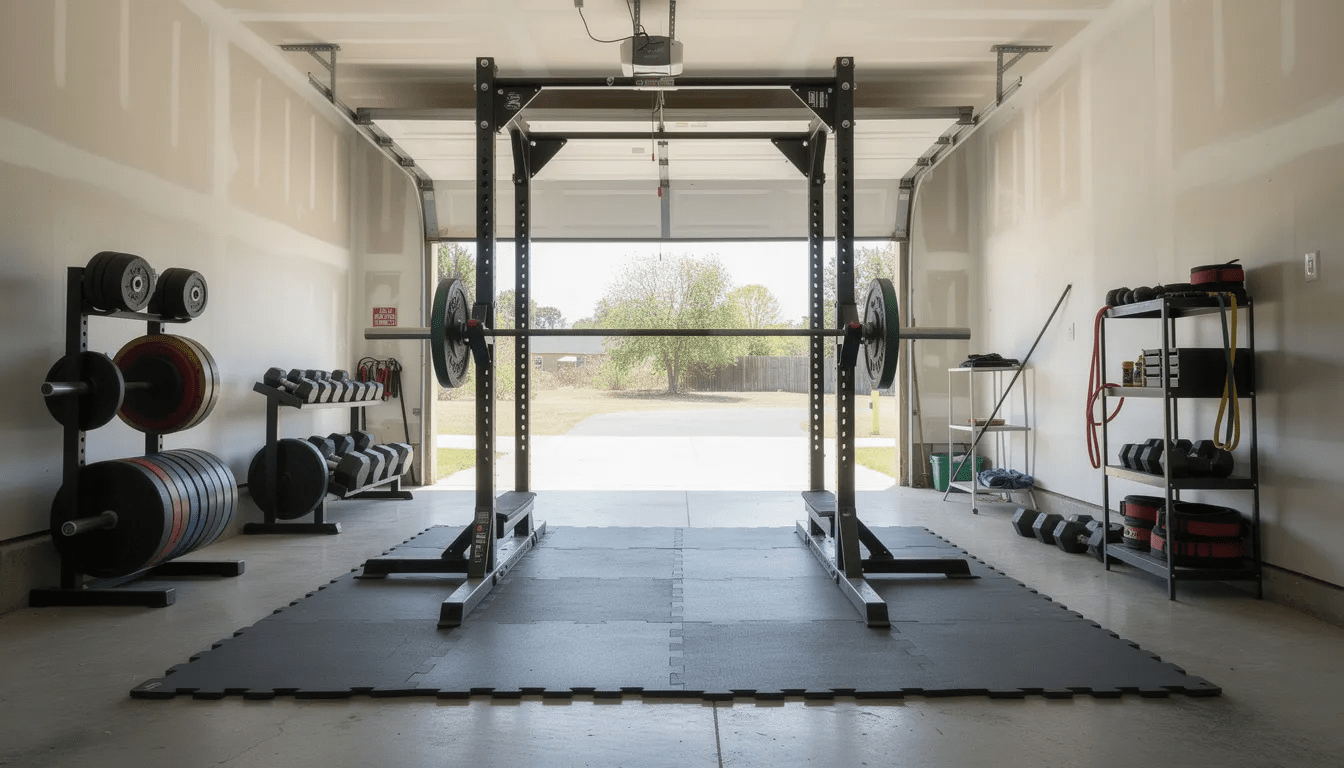
Building a home gym represents a significant investment in your fitness journey, and few pieces of equipment offer as much versatility and value as a GXMMAT power rack. This foundational piece of strength training equipment transforms any garage, basement, or spare room into a comprehensive workout space capable of supporting everything from beginner fitness goals to advanced powerlifting programs.
Understanding Power Rack Fundamentals
A power rack, sometimes called a squat rack or power cage, consists of four vertical posts connected by horizontal bars and adjustable safety catches. The structure creates a secure cage around the lifter, providing crucial safety features for heavy barbell exercises performed without a spotter. The uprights typically include numbered holes spaced at regular intervals, allowing users to position J-hooks and safety pins at precise heights for different exercises and body proportions.
The design philosophy centers on safety and independence. Unlike traditional weight benches or simpler squat stands, the enclosed design catches failed lifts before weights can cause injury. This safety feature makes power racks essential for anyone serious about progressive overload training at home, where training partners aren’t always available.
Essential Features and Specifications
Weight capacity stands as the most critical specification when selecting a power rack. Entry-level models typically support 500-700 pounds, suitable for beginners and intermediate lifters. Serious strength athletes should consider racks rated for 1,000 pounds or more, accounting not just for the loaded barbell weight but also for the dynamic forces generated during exercises like rack pulls or heavy squats.
Steel gauge thickness directly impacts stability and durability. Commercial-grade racks use 11-gauge or thicker steel, while budget models may use 14-gauge material. Thicker steel reduces wobble during use and extends the rack’s lifespan, particularly important for Olympic lifting variations that create more impact.
The spacing between holes on the uprights affects exercise precision. Standard 2-inch spacing works for most applications, but 1-inch spacing or Westside hole spacing provides finer adjustments, particularly valuable for bench press setups where small changes in J-hook height significantly impact lifting mechanics.
Space Planning and Footprint Considerations
Power racks require careful space assessment. A full-size rack typically measures 48-50 inches wide, 48 inches deep, and 84-90 inches tall. However, the functional space requirements extend beyond these dimensions. You need at least 8 feet of ceiling height to accommodate the rack and allow proper bar clearance for overhead movements.
Beyond the rack footprint, plan for workout space. A minimum 12-foot by 10-foot area allows comfortable barbell loading, walking around the rack, and safe emergency exits from failed lifts. Ceiling-mounted pull-up bars require additional vertical clearance, while floor space considerations must account for plate storage, benches, and movement during exercises like lunges or step-ups.
Half racks and squat stands offer space-saving alternatives but sacrifice some safety features. These options work well for garages or rooms where ceiling height or floor space limits full rack installation. Wall-mounted folding racks provide another solution for tight spaces, swinging out for use then folding flat against the wall when not needed.
Primary Exercise Applications
The squat represents the foundational power rack exercise. Safety pins set just below the bottom position of your squat catch the barbell if you can’t complete a rep, enabling you to train to true failure safely. The rack accommodates front squats, back squats, box squats, and pause squats, with J-hook adjustments accommodating different bar positions.
Bench press variations become safer inside a power rack. Position safety pins just above chest height to catch failed reps without a spotter. The setup works for flat bench, incline press, close-grip variations, and floor press. Some lifters use the safety pins to practice specific sticking points by pressing from a dead stop at various heights.
Overhead pressing movements, including military press and push press, benefit from the adjustable J-hooks for different starting positions. The rack’s structure provides stability reference points and catches the bar if balance fails during heavy attempts.
Pull-up bars integrated into most power racks add bodyweight training capacity. The elevated position allows full range-of-motion pull-ups, chin-ups, and hanging leg raises without additional equipment. Some advanced racks include multiple grip positions or attachment points for resistance bands.
Advanced Training Possibilities
Beyond basic barbell movements, power racks support specialized training methods. Rack pulls, where the barbell starts elevated on safety pins, allow deadlift variations focusing on specific ranges of motion or accommodating mobility limitations. Pin presses for bench press or shoulder press create similar focal training opportunities.
Band training expands strength curves and adds accommodating resistance. Many modern racks include band pegs on the base, allowing attachment of resistance bands that increase tension throughout the movement range. This setup challenges lifters differently than traditional barbell weight alone, particularly beneficial for developing explosive power.
Landmine attachments convert one corner of the rack into a pivot point for rotational exercises, single-arm presses, and core movements. Cable pulley systems, either permanently mounted or portable, transform the rack into a functional trainer capable of isolation exercises and rehabilitation movements.
Material Quality and Construction Standards
Frame construction separates budget racks from professional equipment. Welded connections provide superior strength compared to bolted assemblies, though quality bolt-together designs offer adequate stability for most home gym applications. Powder coating protects against rust and wear, particularly important in garage gyms exposed to temperature fluctuations and humidity.
Hardware quality matters for both safety and longevity. Stainless steel or zinc-plated bolts resist corrosion better than standard hardware. Self-locking nuts prevent gradual loosening from vibration during use. Safety pin mechanisms should engage positively and resist accidental release.
Weight capacity ratings from reputable manufacturers undergo rigorous testing, but budget imports may list optimistic specifications without proper validation. Research user reviews and independent testing when considering unfamiliar brands, especially for racks supporting heavy loads.
Assembly and Installation Requirements
Most power racks arrive partially disassembled, requiring 2-4 hours for assembly by two people. Basic hand tools suffice for most models, though power tools speed the process. The instruction manual quality varies significantly between manufacturers, with premium brands providing detailed, illustrated guides while budget options may include minimal documentation.
Floor protection prevents damage and increases stability. Rubber mats designed for gym use absorb impact, reduce noise, and protect both flooring and equipment. Concrete floors handle racks well, but wood or tile may require additional reinforcement or protective layers. Some heavy racks benefit from being bolted to the floor, though most home gym users achieve adequate stability through proper leveling and weight distribution.
Leveling the rack ensures safety pin engagement and prevents uneven loading. Use shims or adjustable feet to compensate for uneven floors. A level rack moves smoothly along the uprights without binding or gaps that could compromise safety.
Budget Considerations and Value Analysis
Power rack prices range from $300 for basic models to $3,000 or more for commercial-grade equipment with extensive attachments. The middle market between $600-$1,200 offers the best value for serious home gym users, providing robust construction, reliable safety features, and upgrade potential without premium pricing.
Consider the total cost of ownership beyond the initial purchase. Shipping for heavy steel structures adds $100-$300 for most residential deliveries. Accessories like additional J-hooks, safety straps instead of pins, dip attachments, and weight storage expand functionality but increase investment. Factor in flooring, a quality barbell, weight plates, and a bench to calculate true startup costs.
Used power racks offer significant savings if you can inspect them personally. Check for bent uprights, damaged threads, missing hardware, and excessive rust. The simple design makes used racks less risky than complex machines with moving parts and cables, though safety components warrant careful evaluation.
Maintenance and Longevity
Proper maintenance extends power rack life indefinitely. Regular cleaning removes chalk dust, sweat, and debris that can corrode metal surfaces or interfere with pin insertion. Wipe down uprights and safety equipment after heavy training sessions, particularly in humid environments.
Inspect safety pins and J-hooks regularly for wear, cracks, or deformation. These components bear repeated stress and prevent injuries, making their integrity critical. Replace any safety equipment showing signs of damage rather than risking catastrophic failure during use.
Lubricate moving parts and bolt threads periodically to prevent seizing and ensure smooth adjustments. Apply a light machine oil or dry lubricant to vertical uprights where J-hooks and safety pins slide. Tighten bolted connections every few months, as vibration from use can gradually loosen hardware.
Making Your Final Selection
Choosing the right power rack balances current needs against future growth. Beginners tempted by minimal equipment may outgrow basic racks quickly as strength increases and training becomes more sophisticated. Investing in a mid-range rack with upgrade potential often proves more economical than replacing inadequate equipment within a year.
Consider attachment compatibility when selecting a brand. Proprietary hole patterns or unique hardware may limit future expansion options. Popular brands with extensive accessory ecosystems provide long-term flexibility as training needs evolve.
Warranty coverage indicates manufacturer confidence in their product. Look for lifetime warranties on frames and at least one year on moving parts and accessories. Customer service responsiveness matters when issues arise, particularly for complex assemblies or defective components.
The power rack serves as the cornerstone of effective home strength training, providing safety, versatility, and progression potential that justifies its central role in any serious home gym setup. Whether supporting a beginner’s first bodyweight squats or an advanced lifter’s pursuit of elite strength, a quality power rack delivers decades of reliable service and countless productive training sessions.
