

Introduction
When I first started working in electronics design, I often overlooked the humble button. We tend to focus on screens and software, forgetting that the physical “click” is the first interaction a user has with a machine.
Recently, I’ve seen many engineers struggle to choose between touchscreens and physical buttons for industrial projects. Just like preparing for a tough technical interview, designing hardware requires understanding the fundamentals. In this guide, I want to share why tactile membrane switches are often the safest choice for reliable device design, specifically in medical and industrial fields.
Defining the Tactile Experience
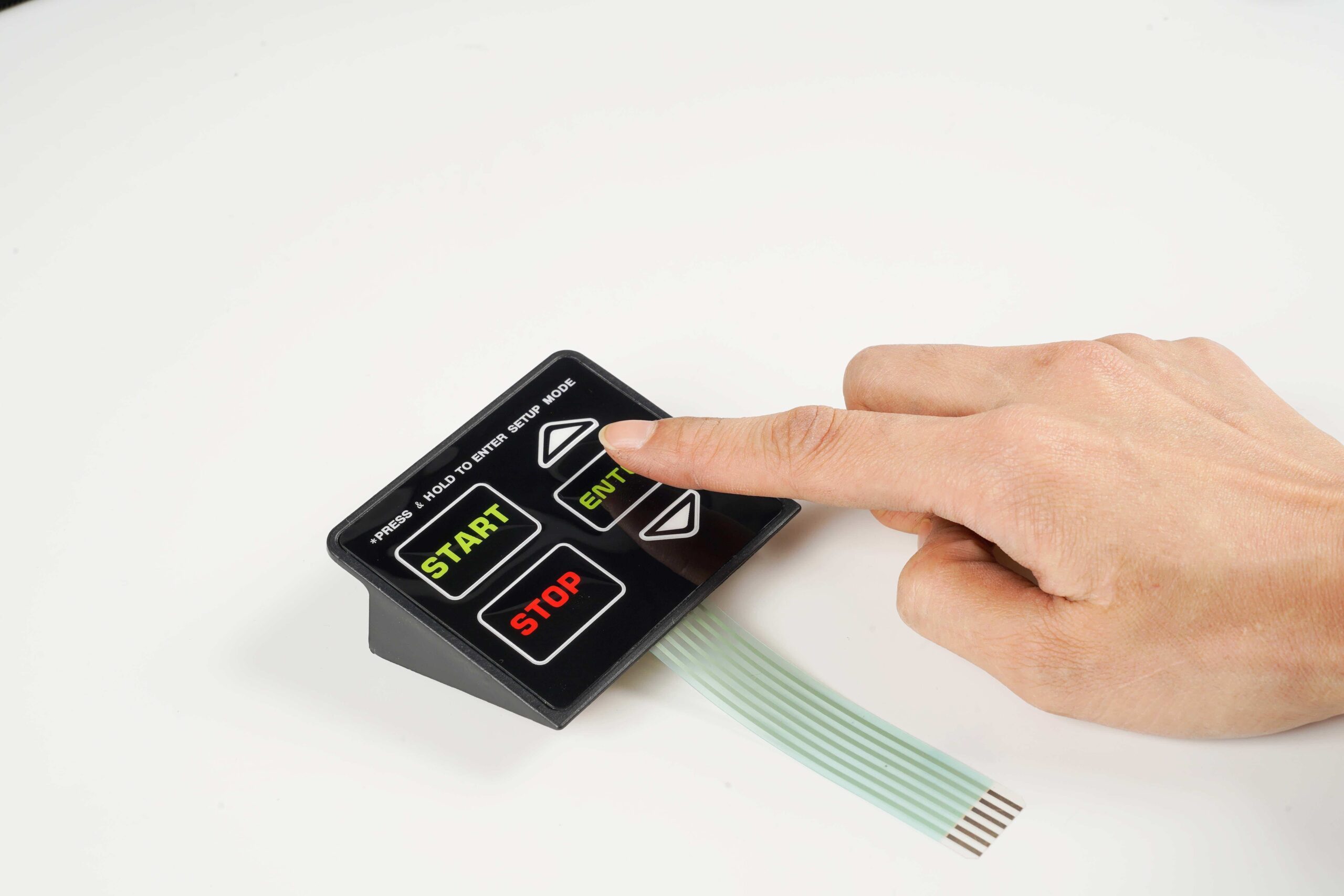
At its core, a membrane switch is a low-profile electrical switch that turns a circuit on and off. But the distinction “tactile” refers specifically to the feedback mechanism.
When you press a non-tactile switch (like on a microwave), you might hear a beep, but your finger feels nothing. In contrast, a tactile switch provides a momentary mechanical recoil. This is usually achieved through a small component known as a metal dome.
When force is applied, the dome collapses, closing the circuit. When released, it snaps back. This action provides two critical sensory inputs:
-
Tactile Feel: A distinct collapse felt by the fingertip.
-
Audible Click: A sharp sound confirming the command was received.
The Anatomy: What Lies Beneath?
To truly understand quality, we need to peel back the layers. A high-quality tactile switch typically consists of six layers.
The most critical layer is the Graphic Overlay. This is the visible interface printed on materials like Polyester (PET). For tactile switches, Polyester is generally preferred over Polycarbonate because it can withstand millions of presses without cracking.
Beneath that lies the Metal Dome, the heart of the switch. High-quality stainless steel domes are often plated with nickel or gold to ensure conductivity and can withstand over 1 million actuations.
The Science of “Snap Ratio”
How do we measure a “good feeling” button? Engineers use a metric called the Snap Ratio.
The Snap Ratio is calculated by comparing the actuation force (the peak force to collapse the dome) against the contact force.
A higher snap ratio means a crisper, more distinct click. A lower ratio results in a “mushy” feeling button. For most industrial applications, a snap ratio between 40% and 60% is ideal. This ensures the operator feels the button press even if they are wearing thick safety gloves.
Why Choose Tactile Over Touchscreens?
In an era of iPads, why stick with physical buttons?
1. Enhanced User Safety In medical devices, input errors can be fatal. A doctor focusing on a patient needs to know they pressed the “administer” button without looking down. The tactile click provides that “blind” confirmation.
2. Durability in Harsh Environments Because the tactile mechanism is sealed under the graphic overlay, the switch is naturally protected from dust, oil, and moisture. This makes it superior to mechanical switches, which often have gaps where debris can enter.
Conclusion
A tactile membrane switch is more than just a button; it is a sophisticated assembly of materials science. By combining the durability of polyester with the mechanical snap of a metal dome, we can create interfaces that are both rugged and user-friendly.
Whether you are designing a medical ventilator or a CNC controller, never underestimate the power of a simple, reliable click.
Author Bio :
Liu is an electronics engineering enthusiast who loves exploring the mechanics behind everyday devices. With a background in HMI design, he frequently writes guides to help engineers bridge the gap between concept and manufacturing.
