

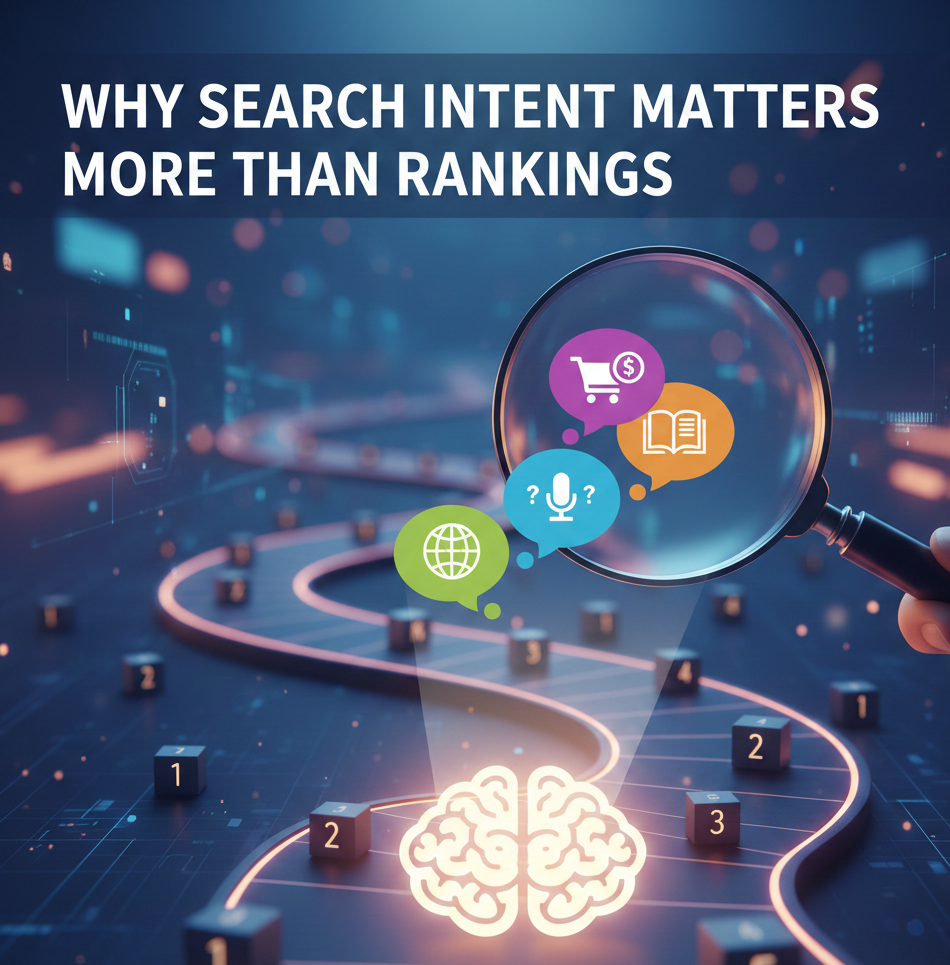
Search marketing has long had only one visible target for success: ranking on page 1. And anything below positions one felt like failure. This focus molded strategies, findings, and expectations. Rankings translated, from cherry-picking accolades to something like the scoreboard, however much they never told you a section of anything. Visibility had been seen as a type of currency and clicks were regarded as relevance. This narrow view over time had led to a divide between what marketers chased and what users truly needed.
What Search Intent Really Represents
Search intent is what motivates a query. It mirrors one’s desire to know, solve or decide something in a particular situation. Some searches are exploratory, some are comparative and some signal a desire to make a move. And knowing the difference would change they way content is created and the way it’s measured. The majority of students doing the best digital marketing course in Delhi find that intent tells you more about performance than just rankings. A page can rank well and still perform poorly if it gets wrong what the search was for.
Empty Traffic Is What You Get From Rankings That Have No Relevance
Traffic often follows high rankings, but high traffic doesn’t always equal impact. Visitors leave in a hurry when content does not match your intent; they are either dismayed or puzzled. This is the appearance of succeeding at the same time as failing horribly. Pages could pull in clicks but not trust. This difference eventually erodes trust and efficacy. Rankings that do not account for intent pad the numbers without growing value, which means they are an unreliable measure of actual growth.
Intent Shapes User Satisfaction
Search engines are built to make users happy, not pay off sites. If the result is what they thought it would be, then and only then will users stick around, interact, click dot-buttons or do anything else. When it doesn’t for them, they come back to the search results straight away. These actions indicate contentment or despair. These signals are in turn directly affected by intent alignment. Content that responds to the right question, in the right way, creates trust. THE REAL CURRENCY And the actual currency is satisfaction, and how you go about earning satisfaction.
Different Queries Require Different Content
Not all searches are deserving of the same response. Information questions require precision and substance, while decision driven ones call for comparison and security. Handling all requests the same produces vanilla copy that doesn’t help anyone. Intent driven content respects context. It changes tone, structure and depth depending on what the user is presumably seeking. This adaptability also increases value and strengthens relationships over the long haul.
Why Intent Outlasts Algorithm Changes
Algorithms change constantly but intent always stays the same because it is a product of human behavior. They’ll always be looking with intent. Intent based strategies tend to be inherently more flexible towards technical changes since they are structured around meaning (no how), not methods. When the work is actually useful, changes are usually an evolution not revolution. Intent-based SEO seems future-proof, as it mirrors how search engines are designed to process data.
Measuring Success Beyond Position
Success measures change when intent comes into the picture. Engagement, time spent, return visits and conversion provide a better picture than just rank. Such signals measure whether content really has helped people. Rankings fluctuate up and down, but engagement that really matters tends to remain steadier. It forces you to take a longer term view, rather than optimizing for position changes.
Content Quality Becomes More Honest
Focusing on intent discourages manipulation. If the point is for satisfaction, then keyword stuffing and clickbait headlines don’t work so well. Motion is an honest content that works better (gets progressively better) over time. Writers become teachers rather than advocates. This integrity establishes trust, and it accumulates over multiple transactions. The intentionality behind content feels less violative, because it prioritizes propositions over seduction.
Context and the Modern Search Landscape
Context extends beyond keywords. What a search means is influenced by location, timing, device and previous behavior. Knowledge of domain context allows for improved interpretation of intent. A late-night search may suggest an urgent need, while the same words entered earlier in the evening would probably indicate research. Text that accounts for these subtleties seems more out now and pertinent, and hence effective.
SEO Needs to Be Taught as an Intent Discipline
Intent analysis outweighs mechanical tactics in the new SEO education. A good digital marketing course in Delhi is one that will always position search as a dialogue rather than a battle. This system teaches marketers to stop, listen and then respond. When you start leading with intent, this is how professionals and practitioners become in tune to creating experiences that fulfill users first, rankings second.
When Rankings Follow Understanding
Intent had no effect on rankings. It reframes them. Rankings are no longer ends but means. Visibility of content will grow organically when it’s regularly fulfilling purpose. The relationship between them doesn’t feel forced but earned. Marketers get confident when performance mirrors value exchange, and that’s not some short-term situation.
Choosing Meaning Over Metrics
Why search intent is more important than rankings has a bit to do with purpose. Rankings quantify placement, but intent quantifies connection. One indicates where a page exists, the other whether it should exist there. Long-lasting search success comes from knowing people, not ranking for positions. When intent takes the lead to strategy, then rankings are an afterthought of relevance instead of the goal.
