

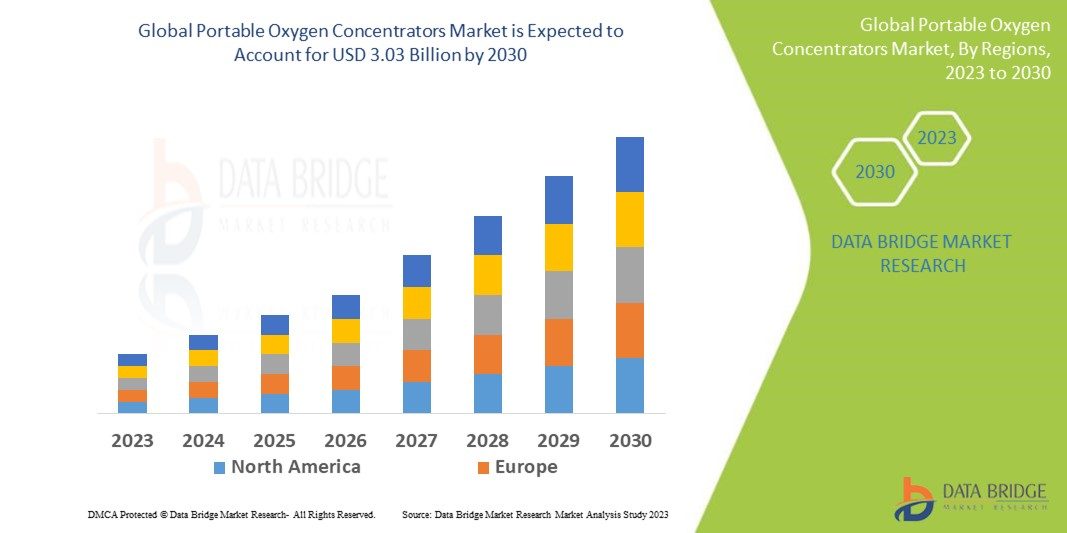
The Portable Oxygen Concentrators Market, valued at USD 3.2 billion in 2024, is witnessing robust global growth driven by the rising prevalence of chronic respiratory diseases, increasing aging population, and growing preference for home-based oxygen therapy. The market is projected to reach USD 6.1 billion by 2032, expanding at a 8.4% CAGR.
Portable oxygen concentrators provide continuous or pulse-dose oxygen delivery in lightweight, compact designs, enabling patients with respiratory conditions to maintain mobility and improved quality of life. These devices are increasingly replacing traditional oxygen cylinders due to their convenience, safety, and portability.
Get More Details : https://www.databridgemarketresearch.com/reports/global-portable-oxygen-concentrators-market
Market Dynamics
Key Market Drivers
Rising Prevalence of Chronic Respiratory Disorders
The global increase in respiratory diseases such as chronic obstructive pulmonary disease, asthma, pulmonary fibrosis, and sleep apnea is a major growth driver.
Key contributing factors include:
-
Aging global population
-
Rising air pollution levels
-
Increased smoking prevalence
-
Occupational exposure to respiratory hazards
Long-term oxygen therapy significantly improves survival rates and quality of life for patients with chronic respiratory conditions.
Growing Shift Toward Home Healthcare and Ambulatory Care
Healthcare systems are increasingly emphasizing home-based treatment to reduce hospital stays and healthcare costs.
Benefits driving adoption include:
-
Improved patient comfort and mobility
-
Reduced hospital admissions
-
Lower long-term treatment costs
-
Increased adoption of telehealth and remote monitoring
Portable oxygen concentrators support ambulatory care models by enabling continuous oxygen delivery outside clinical settings.
Technological Advancements in Device Design
Manufacturers are investing in innovation to enhance device performance and usability.
Key advancements include:
-
Lightweight and compact designs
-
Extended battery life
-
Improved oxygen purity levels
-
Quiet operation and user-friendly interfaces
These improvements enhance patient adherence and satisfaction.
Market Challenges
High Cost of Portable Oxygen Concentrators
Portable oxygen concentrators are more expensive than traditional oxygen delivery systems.
Challenges include:
-
High initial device cost
-
Battery replacement expenses
-
Maintenance and servicing requirements
Cost sensitivity limits adoption in price-conscious markets.
Regulatory Compliance and Product Approval Complexity
Medical device regulations vary across regions, creating challenges for manufacturers.
Issues include:
-
Lengthy approval timelines
-
Compliance with safety and performance standards
-
Post-market surveillance requirements
These factors increase time-to-market and development costs.
Market Restraints
Limited Oxygen Flow Capacity for Severe Patients
Some portable oxygen concentrators may not meet the high oxygen flow requirements of patients with severe respiratory conditions.
This limits their use among patients requiring continuous high-flow oxygen therapy.
Dependence on Battery Performance
Battery limitations affect device runtime and usability, especially for active users and during long-distance travel.
Market Opportunities
Rising Demand for Oxygen Therapy in Emerging Markets
Improving healthcare infrastructure and increasing awareness of respiratory care in emerging economies are creating strong growth opportunities.
Integration with Digital Health and Remote Monitoring
Smart portable oxygen concentrators integrated with digital platforms enable:
-
Usage tracking
-
Therapy optimization
-
Remote patient monitoring
This enhances clinical oversight and patient outcomes.
Expansion of Travel-Friendly and Airline-Approved Devices
The demand for lightweight, airline-approved portable oxygen concentrators is increasing as patients seek greater mobility and travel independence.
Segment Analysis
By Product Type
-
Continuous Flow Portable Oxygen Concentrators
-
Pulse Dose Portable Oxygen Concentrators
By Technology
-
Pressure Swing Adsorption
-
Vacuum Pressure Swing Adsorption
By End User
-
Home Care Settings
-
Hospitals
-
Ambulatory Surgical Centers
By Distribution Channel
-
Medical Equipment Providers
-
Pharmacies
-
Online Sales
Regional Insights
North America dominates the portable oxygen concentrators market due to high prevalence of respiratory disorders, favorable reimbursement policies, and strong adoption of home healthcare solutions. Europe follows with increasing focus on elderly care and respiratory health. Asia-Pacific is the fastest-growing region, driven by rising pollution levels, expanding healthcare access, and growing awareness of oxygen therapy.
Competitive Landscape
The market is moderately competitive, with key players focusing on product innovation, portability, and patient-centric design.
Major Companies Profiled
-
Philips Respironics
-
Inogen
-
Invacare Corporation
-
ResMed
-
Drive DeVilbiss Healthcare
-
CAIRE Inc.
-
OMRON Healthcare
These companies emphasize:
-
Compact and lightweight designs
-
Extended battery life
-
Enhanced oxygen delivery performance
-
Expansion into emerging markets
Recent Developments & Trending Updates: Portable Oxygen Concentrators Market
Growing Preference for Lightweight and Compact Devices
Patients increasingly prefer portable concentrators that offer ease of mobility and discreet usage.
Expansion of Home Oxygen Therapy Programs
Healthcare providers are expanding home oxygen therapy services to reduce hospital burden and improve patient outcomes.
Advancements in Battery and Sensor Technologies
Improvements in battery efficiency and oxygen sensing are extending device runtime and reliability.
Increasing Demand from Geriatric Population
Aging populations worldwide are driving sustained demand for long-term oxygen therapy solutions.
Focus on Patient-Centric Design and Usability
Manufacturers are prioritizing ergonomic design, quiet operation, and ease of maintenance.
Conclusion
The Portable Oxygen Concentrators Market is poised for strong growth as respiratory disease prevalence rises and healthcare systems shift toward home-based and patient-centric care. Despite challenges related to cost and oxygen flow limitations, advancements in technology, expanding home healthcare adoption, and growing demand in emerging markets are expected to drive long-term market expansion. Companies focusing on innovation, affordability, and digital integration will remain competitive in this evolving market.
Get More Reports :
https://www.databridgemarketresearch.com/reports/global-artificial-intelligence-in-healthcare-market
https://www.databridgemarketresearch.com/reports/global-premium-wine-market
https://www.databridgemarketresearch.com/reports/global-onion-powder-market
https://www.databridgemarketresearch.com/reports/latin-america-aesthetic-injectables-market
https://www.databridgemarketresearch.com/reports/global-glass-substrate-market
