

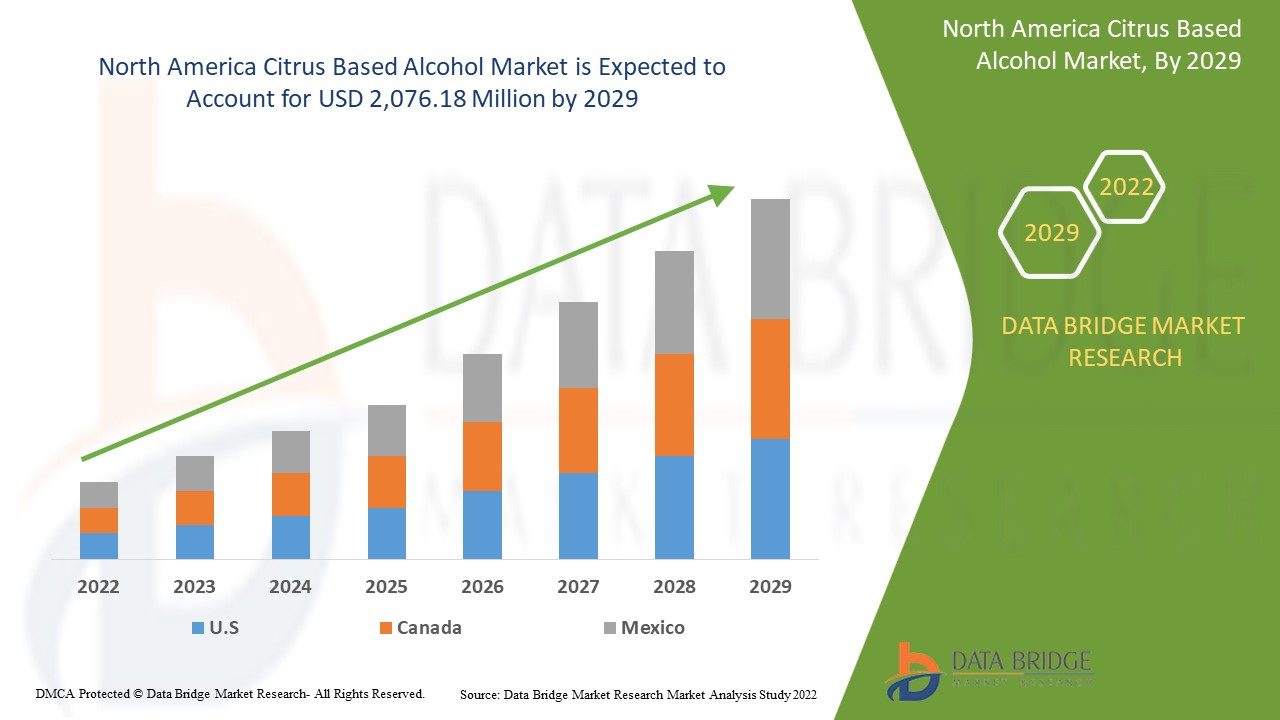
The North America citrus based alcohol market, valued at USD 3.1 billion in 2024, is expanding rapidly due to increased consumer preference for natural and clean-label alcoholic beverages. The market is projected to grow at a 7.2% CAGR, reaching approximately USD 5.5 billion by 2032.
Citrus based alcohols—including products derived from orange, lemon, lime, grapefruit, and other citrus fruit extracts—are widely used in spirits, ready-to-drink (RTD) beverages, flavored malt drinks, liqueurs, and premium craft cocktails. Their natural flavor profiles, perceived health benefits, and versatility have made them key ingredients in both mainstream and craft beverage segments.
Get More Details : https://www.databridgemarketresearch.com/reports/north-america-citrus-based-alcohol-market
Market Dynamics
Key Market Drivers
Rising Consumer Preference for Natural and Clean Label Beverages
Health-conscious consumers in North America increasingly demand beverages with:
-
Natural fruit-derived flavors
-
Minimal artificial additives
-
Clean ingredient lists
Citrus based alcohols are perceived as a healthier and more authentic alternative to synthetic flavorings, particularly among Millennials and Gen Z consumers. The trend toward botanical and fruit flavored spirits has driven citrus alcohol consumption at an 8% annual rate since 2021.
Growth of Craft Spirits & Premium RTD Beverages
The craft alcohol segment continues to expand, with citrus based alcohols playing an integral role in:
-
Craft gin
-
Citrus-infused vodka
-
RTD cocktails
-
Flavored rum and tequila blends
Craft and premium brands are leveraging citrus extracts to differentiate products, enhance aroma complexity, and cater to mixology trends, fueling market demand.
Expansion of Ready-To-Drink (RTD) Segment
The RTD segment has surged due to convenience, portability, and flavor innovation. Citrus based alcohols are favored for:
-
Citrus Margarita blends
-
Lemon-lime spritzers
-
Grapefruit hard seltzers
-
Orange-based mixed drinks
RTDs represent a key growth driver, contributing over 30% of regional consumption, and poised to grow at 9% CAGR through 2032.
Tourism & Hospitality Industry Recovery
Post-pandemic recovery in travel and hospitality has boosted on-premise consumption of citrus-flavored alcoholic beverages in bars, clubs, resorts, and restaurants. Citrus cocktails and craft spirits have become staples in beverage menus, supporting sustained market growth.
Market Challenges
Price Volatility in Citrus Raw Materials
Citrus fruit raw material pricing is affected by:
-
Seasonal yields
-
Weather variability
-
Supply chain disruptions
-
Trade restrictions
Price fluctuations in orange, lemon, and grapefruit supplies have led to increased production costs for citrus extracts used in alcohol flavors.
Regulatory Compliance and Labeling Requirements
Stringent regulations around:
-
Alcohol labeling
-
Natural vs artificial classification
-
Health claims
-
Ingredient disclosures
…require producers to invest in compliance, traceability, and quality assurance systems. Variations in state and federal regulations can also complicate product launches across multiple markets.
Market Restraints
Competition from Alternative Flavor Bases
Citrus based alcohols compete with other natural flavor categories such as:
-
Botanical and herb infusions
-
Berry and tropical fruit flavors
-
Spiced and barrel-aged profiles
-
Synthetic flavor alternatives
This competition can fragment market share, especially in more experimental and niche beverage segments.
Market Opportunities
Innovation in Functional and Low-Alcohol Beverages
Growth in:
-
Low-alcohol cocktails
-
Functional drinks with added botanicals, adaptogens, and electrolytes
-
Health-oriented alcohol alternatives
…presents an emerging opportunity for citrus based alcohols, particularly in premium and wellness-focused RTDs.
Expansion in E-Commerce & Direct-to-Consumer Sales
Online alcohol sales and direct-to-consumer shipments continue to rise, driven by:
-
Digital shopping convenience
-
Broader distribution reach
-
Customization and subscription models
Citrus flavored alcohol brands can capitalize on digital platforms to reach niche and loyal consumer segments with tailored offerings.
Craft Distillery Growth Across North America
The United States and Canada host thousands of craft distilleries, many of which emphasize unique, locally sourced citrus flavor profiles. This trend supports regional production growth and premiumization.
Segment Analysis
By Product Type
-
Citrus Vodka
-
Citrus Gin
-
Citrus Tequila & Mezcal Blends
-
Citrus Flavored Liqueurs
-
RTD Citrus Drinks
-
Hard Seltzers with Citrus Profiles
-
Other Citrus Infused Alcohols
By Source
-
Orange
-
Lemon
-
Lime
-
Grapefruit
-
Tangerine
-
Yuzu & Exotic Citrus
By Distribution Channel
-
On-Trade (Bars, Restaurants, Clubs, Hotels)
-
Off-Trade (Liquor Stores, Supermarkets, Retail Outlets)
-
E-Commerce & Direct Sales
By End User
-
Millennials & Gen Z Consumers
-
Premium Spirits Enthusiasts
-
Casual & Occasional Drinkers
-
Hospitality & Event Segments
Competitive Landscape
The North America citrus based alcohol market is moderately consolidated, with major beverage companies expanding citrus flavor portfolios and craft distillers innovating around natural extracts.
Key Market Players
-
Diageo plc
-
Pernod Ricard
-
Bacardi Limited
-
Constellation Brands
-
Beam Suntory
-
Brown-Forman Corporation
-
Sazerac Company
-
Tito’s Handmade Vodka
-
New Age Beverage Company
-
Local craft distilleries specializing in citrus infusions
These companies focus on:
-
Innovative flavor development
-
Premiumization strategies
-
Marketing campaigns that highlight natural ingredients
-
Expansion into new distribution channels
Recent Developments & Trending Updates: North America Citrus Based Alcohol Market
Rapid Growth of Hard Seltzers with Citrus Profiles
Hard seltzers featuring lemon, lime, grapefruit, and orange variants continue to dominate seasonally driven consumption, particularly in the U.S. market. Citrus profiles are among the fastest-growing flavors due to refreshing attributes and broad appeal.
Surge in Citrus-Infused Craft Spirits
Small and regional distillers are releasing limited-edition citrus infused vodkas, gins, and specialty liqueurs, often tied to local citrus sourcing and artisan production methods.
Expansion of Premium RTD Cocktails
Brands are increasingly launching premium citrus RTD cocktails with quality ingredients and craft positioning to capture higher price points and appeal to discerning consumers.
Increased Health & Wellness Positioning
Alcohol brands are leveraging citrus extracts to communicate:
-
No artificial flavors
-
Lower sugar content
-
Clean label messaging
This resonates with health-focused drinkers seeking authenticity.
Experiential Beverage Marketing
On-site tastings, cocktail workshops, virtual mixology events, and citrus flavor-focused campaigns are boosting brand engagement and consumer loyalty.
Conclusion
The North America citrus based alcohol market is poised for sustained growth driven by consumer demand for natural flavors, the expansion of RTD beverages, strong craft spirit culture, and evolving consumption trends. Challenges around raw material pricing and regulatory complexities persist, but innovation in functional drinks, e-commerce distribution, and premium citrus profiles present significant opportunities. Brands and producers investing in natural citrus flavor development, strategic marketing, and diversified channels will be well-positioned to capture long-term growth.
Get More Reports :
https://www.databridgemarketresearch.com/reports/latin-america-aesthetic-injectables-market
https://www.databridgemarketresearch.com/reports/global-glass-substrate-market
https://www.databridgemarketresearch.com/reports/global-smart-vending-machine-market
https://www.databridgemarketresearch.com/reports/global-antibody-drug-conjugates-market
https://www.databridgemarketresearch.com/reports/global-esim-market
