

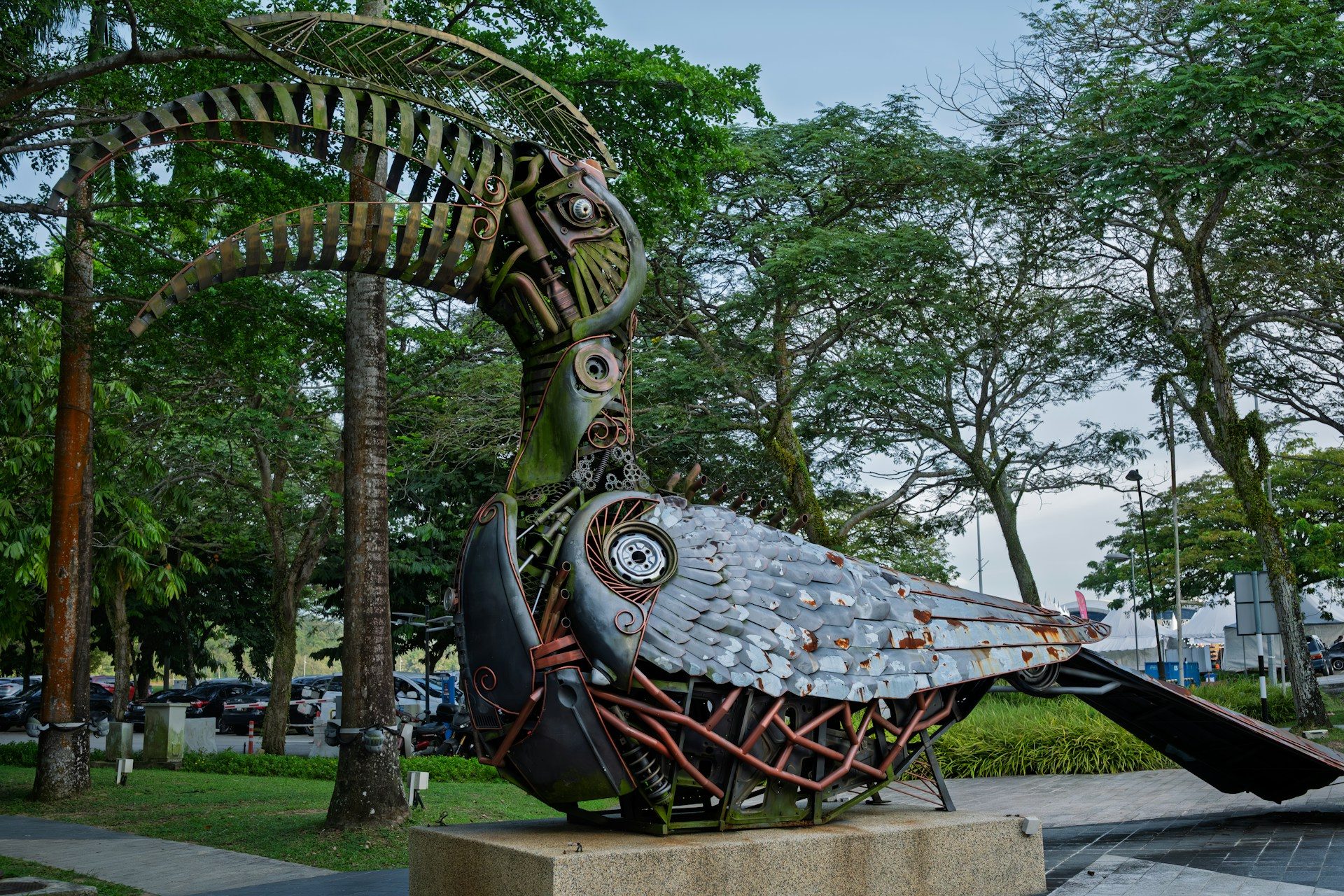
Recycled metal art is an artistic movement and creative practice in which artists use discarded, scrap, or repurposed metal materials to produce visual artworks, sculptures, installations, and functional objects. It is a form of sustainable and environmentally conscious art that transforms what would otherwise be waste into something meaningful, expressive, and aesthetically engaging. In a world where industrialization, consumption, and urban development generate unprecedented amounts of metal waste—from old tools and machinery to vehicle parts and construction scraps—recycled metal art serves both as a creative outlet and a cultural response to ecological concerns. It merges craftsmanship with environmental responsibility, turning rusted, bent, or broken pieces of metal into new forms that carry beauty, history, and renewed purpose.
Artists who work with recycled metal often explore a wide range of materials: discarded steel rods, copper wires, car parts, nuts and bolts, aluminum sheets, iron scraps, pipes, and even electronic waste. Each item carries its own textures, shapes, and histories, which the artist incorporates into the final piece. Some artists focus on preserving the original forms of the metal, appreciating the industrial character of bolts, gears, springs, or chains. Others reshape, weld, melt, hammer, and polish the material into completely new structures that bear no resemblance to the original objects. In both approaches, recycled metal art stands out because of its unique materiality—weighty, durable, tactile, and often visually rugged. The medium’s inherent toughness gives artists the ability to create both delicate intricate forms and bold monumental structures that can survive weather, time, and physical wear.
The use of recycled metal in art has roots in the early twentieth century, especially in movements such as Dada, Constructivism, and Assemblage. Artists like Pablo Picasso and Marcel Duchamp experimented with found objects, while later artists such as John Chamberlain became famous for sculptures made from crushed automobile parts. These movements challenged traditional art-making methods and expanded the definition of what materials could be considered “art.” Since then, recycled metal art has grown into a global phenomenon, embraced by professional sculptors, hobbyists, eco-artists, and craftspeople. Today, recycled metal artworks are found in public parks, galleries, private collections, and even functional spaces such as gardens and homes.
One of the defining characteristics of recycled metal art is its connection to sustainability. At a time when climate change, pollution, and environmental degradation are major global issues, choosing to create art from discarded metal is a powerful message. Metal extraction and manufacturing processes are resource-intensive, involving mining, smelting, transportation, and energy consumption. By reusing existing metal, artists help reduce waste and demonstrate alternatives to mass production. The material that might have ended up in a landfill or scrap yard is reborn as something new and inspiring. The artwork becomes a visual argument for recycling, upcycling, and environmental awareness.
But recycled metal art is not only about ecological significance; it is also about creativity, storytelling, and emotional impact. Each piece of metal has a history—perhaps it came from a broken bicycle, an abandoned factory, or a car that once belonged to a family. When artists incorporate these elements into their work, they embed layers of narrative and memory. A sculpture made from old tools may evoke nostalgia for craftsmanship, while a sculpture made from machine parts might symbolize industrial progress or critique modern technology. The viewer often finds themselves contemplating where the material originated and what journey it underwent before becoming art.
Artists use various techniques to shape and assemble recycled metal. Welding is one of the most essential methods, allowing them to join pieces securely and shape them into larger compositions. Welding can create smooth seams, strong bonds, and structural stability, enabling artists to build both small tabletop sculptures and massive outdoor installations. Cutting and grinding are also crucial, as they allow artists to shape the metal precisely, remove rust, or create surface textures. Hammering, forging, and bending help manipulate thick or rigid metals, giving sculptors control over curves, angles, and form. Some artists embrace the natural state of the metal and avoid heavy manipulation, allowing rust, patina, dents, and imperfections to enhance the artwork’s character. Others polish and refine the metal to achieve a sleek, modern appearance.
Patination is another technique frequently used in recycled metal art. Patinas are chemical or environmental reactions that create color changes on metal surfaces. Copper can turn turquoise, iron can develop rich rust textures, and steel can deepen into dark blue or black hues. Artists often accelerate or control these effects to give their work a specific mood or finish. The interplay of light on metal—especially when polished or textured—adds an additional visual dimension, making the artwork appear different depending on the viewer’s angle or the time of day.
Recycled metal art is used in a wide range of artistic and functional contexts. One of its most popular uses is in sculpture. Sculptors create animals, humans, abstract forms, and architectural structures entirely from found metal. For example, a recycled metal lion sculpture may include gears for the eyes, chains for the mane, sheet metal for the body, and screws for texture. These sculptures often combine realism with imagination, giving familiar forms a mechanical or futuristic aesthetic. Large outdoor sculptures made from recycled metal are especially common, as metal’s durability makes it resistant to weather conditions. Cities, parks, universities, and cultural institutions frequently commission such works to emphasize sustainability and artistic innovation.
Another important use of recycled metal in artwork is in creating abstract or conceptual pieces. Many artists experiment with shapes, lines, and textures to explore themes such as chaos, harmony, transformation, and modernity. Metal lends itself well to abstraction because of its flexibility and strength. Artists can create sharp angular structures, flowing curves, or complex geometric patterns that convey movement and emotion. Conceptual recycled metal art often encourages viewers to reflect on themes like industrialization, environmental cycles, or the contrast between nature and human-made materials.
Functional art is another major category where recycled metal is used extensively. Many artists create furniture, lighting fixtures, garden ornaments, and decorative home items from discarded metal. For example, tables might be made from old machine parts, lamps from recycled pipes, and wall art from flattened cans or old keys. Functional pieces combine practicality with creativity, transforming ordinary living spaces into environments filled with character and sustainability. These items often have a rustic or industrial aesthetic, appealing to people who appreciate handmade craftsmanship and eco-friendly design.
Jewelry and small accessories are also common applications of recycled metal art. Artists craft earrings, bracelets, rings, pendants, and wearable art pieces from metal fragments such as wire scraps, nuts and bolts, or leftover sheet metal. The results are often bold, unconventional, and expressive. Recycled metal jewelry tends to have a raw, artistic look, making it popular among people who appreciate unique, handcrafted designs rather than mass-produced accessories. In this form, the art becomes intimately connected to the wearer, allowing sustainability to be expressed through personal fashion.
In communities around the world, recycled metal art often becomes a catalyst for social and cultural projects. In developing regions or low-income communities, metal scraps are abundant and accessible, making them valuable resources for creative expression. Community workshops teach children and adults how to repurpose metal into art, fostering skills such as welding, design thinking, problem-solving, and teamwork. These workshops not only reduce waste but also generate income opportunities for local artisans. Recycled metal art has the potential to uplift communities economically and culturally, turning environmental challenges into creative solutions.
Public art installations made from recycled metal often serve as symbols of resilience, environmental responsibility, or local identity. A sculpture created from discarded tools may honor a region’s industrial past. A large fish sculpture made from ocean debris can raise awareness about pollution. These public artworks become landmarks, encouraging people to engage with environmental issues in a tangible and visually compelling way. Schools, environmental organizations, and cultural foundations frequently collaborate with artists to create public recycled metal installations that educate and inspire.
One of the most remarkable aspects of recycled metal art is that it embraces imperfection. Unlike new, machine-manufactured metal, recycled metal carries scars, rust, dents, and irregularities. Artists treat these imperfections as assets rather than flaws. The unpredictability of the materials encourages experimentation and improvisation. An artist may begin a project with a particular idea but shift directions after discovering an interesting object, such as a car brake pad that looks like a bird’s wing or a gear that resembles an abstract sun. In this way, recycled metal art becomes a collaboration between the artist and the material, guided by intuition as much as technique.
The finishing process in recycled metal art is another important stage. Some artworks are left raw to highlight their industrial origins, while others are coated with protective sealants to prevent rust or enhance color. Clear coats, wax coatings, rust stabilizers, and metal paints are often used to preserve the artwork’s appearance and longevity. For outdoor pieces, weather-resistant finishes help protect the sculpture from rain, sunlight, and environmental damage. The final finish contributes significantly to the overall aesthetic—shiny surfaces create a modern feel, while matte or rusted textures evoke age and authenticity.
The symbolism embedded in recycled metal art is diverse and powerful. Many artists use metal to explore ideas of transformation and renewal. The act of converting waste into beauty reflects deeper philosophical themes about change, resilience, and the cyclical nature of life. The material itself—strong, durable, enduring—can symbolize stability, protection, or permanence. Yet its recycled nature points to fragility, loss, and rebirth. These dualities make recycled metal art emotionally rich and intellectually engaging.
Modern technology has broadened the possibilities of recycled metal art even further. Artists now incorporate techniques such as plasma cutting, laser engraving, and 3D modeling to enhance precision and complexity. Some combine recycled metal with digital artists such as light installations, sound elements, or motion sensors, creating interactive and multimedia artworks. Others blend recycled metal with organic materials like wood or stone, producing mixed-media pieces that celebrate the harmony and contrast between natural and industrial elements.
As sustainability becomes more important in global culture, the appreciation and market demand for recycled metal art continues to grow. Art collectors, interior designers, architects, and eco-conscious consumers increasingly seek artworks that align with environmental values. Recycled metal pieces often serve as conversation starters, as viewers are fascinated by how the artist transformed materials that once belonged to machines, buildings, or everyday objects. This growing interest has led to exhibitions, festivals, and competitions dedicated entirely to recycled art, further establishing it as a respected and influential artistic genre.
Recycled metal art also plays an important role in environmental education. Museums and environmental organizations often collaborate with artists to create installations that highlight issues such as waste management, resource depletion, and climate change. These artworks make abstract environmental problems more concrete and emotionally relatable. A sculpture made from discarded electronic waste, for example, can powerfully communicate the consequences of consumerism and e-waste pollution. Through art, audiences engage with environmental issues in a way that is both emotional and intellectual.
In conclusion, recycled metal art is much more than a creative form—it is a sustainable practice, a cultural movement, and a powerful form of environmental expression. By transforming discarded metal into artworks that are visually compelling and meaningful, artists challenge waste, inspire creativity, and contribute to a more sustainable future. The material’s durability, versatility, and rich symbolic potential make it ideal for a wide range of applications, from sculptures and installations to functional objects and jewelry. As society continues to grapple with ecological challenges, recycled metal art stands as a testament to human ingenuity and the belief that beauty and value can be found even in the most unexpected places. The practice encourages us to reflect on the life cycle of materials, the impact of human actions on the environment, and the possibilities of renewal. Ultimately, recycled metal art exemplifies how creativity can transform not only materials but also perspectives—turning waste into wonder, and discarded fragments into stories worth celebrating.
