

Introduction
The digital therapeutics (DTx) in mental health market is revolutionizing how mental health conditions are managed and treated. With the rise of mental health awareness, digital solutions are becoming an essential part of therapy, self-care, and clinical treatment. These solutions provide evidence-based interventions to help individuals suffering from anxiety, depression, PTSD, and other psychological disorders.
As technology advances, the adoption of AI-driven mental health apps, cognitive behavioral therapy (CBT)-based programs, and virtual reality (VR)-assisted treatments is expanding. The combination of accessibility, cost-effectiveness, and personalized care is driving the rapid growth of digital therapeutics in mental healthcare.
Understanding Digital Therapeutics (DTx)
What Are Digital Therapeutics?
Digital therapeutics (DTx) refer to software-based interventions that provide clinically validated therapeutic solutions for mental health, chronic diseases, and neurological conditions. Unlike general wellness or meditation apps, DTx solutions undergo rigorous clinical trials to ensure their effectiveness in treating mental health disorders.
How Are Digital Therapeutics Different from Traditional Mental Health Apps?
-
DTx solutions are FDA-approved or CE-certified for medical use.
-
They use scientific methods such as cognitive behavioral therapy (CBT), AI-driven therapy, and digital biomarkers.
-
Unlike meditation apps, DTx tools require prescription in some cases and are often covered by insurance.
Regulatory Aspects and Clinical Validation
For a DTx solution to be accepted as a legitimate therapy, it must meet strict regulatory standards such as:
-
FDA (Food and Drug Administration) approval in the U.S.
-
CE certification for compliance in Europe
-
HIPAA & GDPR compliance to protect patient data privacy
Market Drivers and Growth Factors
Rising Prevalence of Mental Health Disorders
-
The global rise in depression, anxiety, and PTSD cases has fueled demand for accessible mental healthcare solutions.
-
WHO reports that one in four people experience mental health issues in their lifetime.
Growing Acceptance of Digital Health Solutions
-
The COVID-19 pandemic accelerated telehealth and digital therapy adoption.
-
Healthcare providers are integrating DTx solutions into mainstream treatment plans.
Demand for Cost-Effective and Scalable Mental Healthcare
-
Traditional therapy is often expensive and inaccessible, especially in rural areas.
-
DTx solutions provide affordable and immediate mental health support via smartphones.
Technological Advancements in AI and Machine Learning
-
AI-powered mental health chatbots provide instant support.
-
Machine learning algorithms personalize therapy based on user data.
Types of Digital Therapeutics for Mental Health
Cognitive Behavioral Therapy (CBT)-Based Apps
-
Apps like Sleepio and Daylight use CBT to address insomnia and anxiety.
-
Scientifically backed CBT techniques help users manage negative thought patterns.
Mindfulness and Meditation Apps
-
Digital therapeutics incorporate guided meditation and breathing exercises to reduce stress.
-
Popular options include Headspace and Calm.
AI-Driven Chatbots for Mental Health Support
-
Woebot and Wysa use conversational AI to provide 24/7 emotional support.
-
These apps analyze user responses to offer CBT-based interventions.
VR-Based Exposure Therapy for PTSD and Phobias
-
VR-assisted exposure therapy helps patients confront their fears in a controlled virtual environment.
-
Effective in treating PTSD, social anxiety, and phobias.
Sleep and Stress Management Tools
-
Apps like Sleepio focus on improving sleep patterns through behavioral therapy.
-
Digital relaxation tools help reduce chronic stress and anxiety.
Key Players in the Digital Therapeutics Market
Several technology and healthcare companies are pioneering the DTx mental health sector:
Leading Digital Therapeutics Providers
-
Big Health – Developers of Sleepio (for insomnia) and Daylight (for anxiety).
-
Pear Therapeutics – Offers FDA-approved solutions for addiction treatment.
-
Woebot Health – Uses AI chatbots to provide real-time mental health support.
-
Mindstrong Health – Focuses on digital biomarkers to track mental health.
-
Click Therapeutics – Specializes in prescription digital therapeutics.
Regulatory Landscape and Challenges
FDA and CE Approval for DTx Solutions
-
Regulatory agencies require clinical trials before approving DTx products.
-
Many digital therapeutics are now classified as medical devices for insurance reimbursement.
Reimbursement Policies and Insurance Coverage
-
The expansion of insurance coverage for digital mental health is improving access.
-
Companies are partnering with healthcare providers for wider adoption.
Data Privacy and Cybersecurity Challenges
-
Strict HIPAA and GDPR compliance is necessary to protect user data.
-
Cybersecurity threats pose risks to patient confidentiality.
Regional Market Analysis
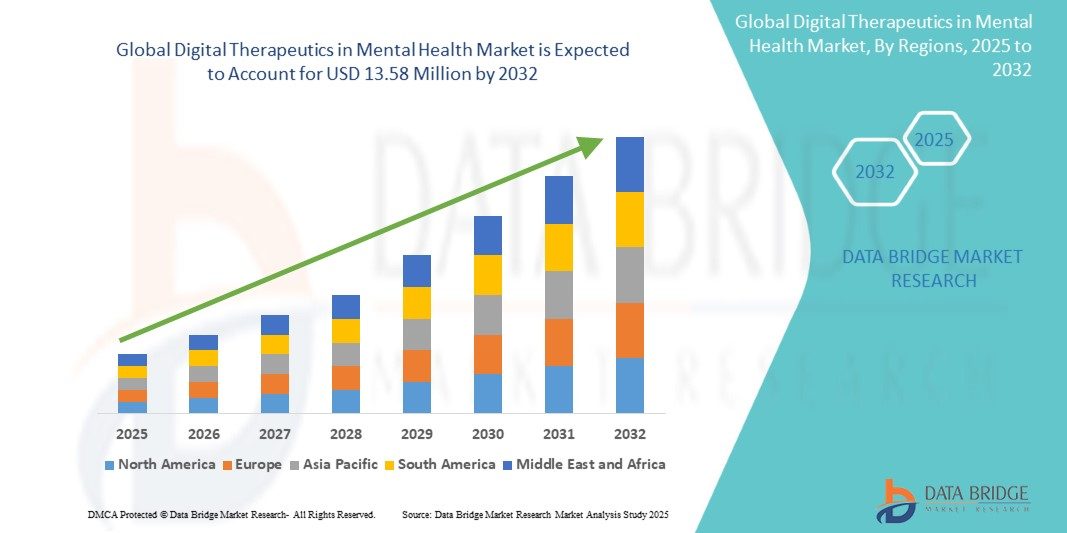
North America: Leading in Digital Health Adoption
-
The U.S. is the largest market for DTx solutions.
-
High adoption of AI-powered mental health apps.
Europe: Growth in Government-Backed Mental Health Initiatives
-
European governments are investing in digital mental healthcare.
-
The UK and Germany are emerging DTx hubs.
Asia-Pacific: Rising Demand for Mental Health Apps
-
Increasing awareness of mental health issues in China, India, and Japan.
-
Strong growth in teletherapy and mobile-based mental health platforms.
Latin America & Middle East: Emerging Market Potential
-
Growth in smartphone-based mental health solutions.
-
Expansion of telehealth policies driving digital therapy adoption.
Future Trends and Innovations
Integration of AI and Personalized Therapy
-
AI-driven platforms will provide customized mental health treatment plans.
-
AI models will predict mental health episodes before they occur.
Advancements in Digital Biomarkers
-
Use of wearable devices to track mental health indicators like sleep, heart rate, and stress levels.
Increased Collaboration Between Tech Companies and Healthcare Providers
-
More partnerships between hospitals, insurers, and tech firms to integrate DTx into traditional care.
Conclusion
The digital therapeutics in mental health market is reshaping the landscape of mental healthcare by offering scientifically validated, accessible, and cost-effective solutions. With ongoing technological advancements, regulatory support, and growing patient acceptance, DTx is positioned to become an integral part of mental health treatment worldwide.
Investments in AI, digital biomarkers, and VR therapy are expected to fuel the next wave of innovation, making mental health support more effective and widely available.
Get More Details : https://www.databridgemarketresearch.com/reports/global-digital-therapeutics-in-mental-health-market
Get More Reports :
https://www.databridgemarketresearch.com/reports/asia-pacific-sarcopenia-treatment-market
https://www.databridgemarketresearch.com/reports/europe-epilepsy-monitoring-devices-market
https://www.databridgemarketresearch.com/reports/global-digital-assurance-market
https://www.databridgemarketresearch.com/reports/middle-east-and-africa-optical-power-meter-market
https://www.databridgemarketresearch.com/reports/north-america-cryo-electron-microscopy-market
