

Introduction
In 2025, the travel and hospitality industry continue to thrive, with increasing demand for seamless digital experiences. The rise of online travel agencies (OTAs) has revolutionized the way people book hotels, flights, and experiences. One of the leading platforms in this space is Booking.com, which allows users to search, compare, and book accommodations from around the world. If you’re considering building a hotel booking app like Booking.com, this guide will walk you through the essential steps of hotel booking app development, including the technology, features, and strategies required to succeed in the competitive travel app development market.
Steps to Build Hotel Booking App like Booking.com
Understanding the Market & User Needs
The first step in building a successful hotel booking app is understanding the market. Travelers today expect fast, convenient, and personalized booking experiences. Your app should cater to these demands by offering a wide range of hotels, user-friendly interfaces, competitive pricing, and secure payment systems. To ensure success in hotel booking app development, it’s crucial to perform thorough market research, analyze competitors, and identify the gaps in the market that your app can fill.
Key factors to consider include
- Target Audience: Are you focusing on budget travelers, luxury guests, or business professionals?
- Unique Selling Proposition (USP): What sets your app apart from existing platforms like Booking.com, Expedia, and Airbnb?
- Personalization: How will you tailor recommendations and search results to individual preferences?
Core Features of a Hotel Booking App
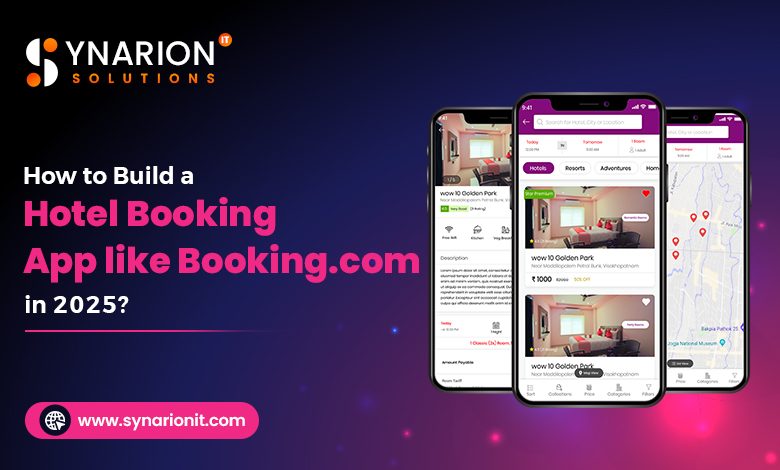
A hotel booking app must have certain key features to be successful. These features ensure that users can easily search, book, and manage their accommodations. Here’s a list of essential features for your hotel booking app:
User Account & Profile Management
Allow users to create profiles where they can save their preferences, payment methods, and booking history. Offering guest check-out options for quicker bookings can also enhance user experience.
Search Functionality
The search feature should allow users to filter hotels based on location, price range, amenities, ratings, and room types. Advanced search filters and intuitive suggestions based on the user’s past behavior or preferences can help improve search accuracy.
Hotel Listings & Details
Each hotel listing should have detailed information, including pictures, descriptions, amenities, room options, and customer reviews. Integrating third-party APIs for hotel inventory management can help you provide real-time data.
Real-Time Booking and Availability
Integrating a booking engine that checks real-time availability is essential. Users should be able to view instant booking options and confirm their reservations within seconds.
Payment Gateway Integration
A secure payment gateway is vital for processing credit card transactions. Popular options include Stripe, PayPal, and Apple Pay. Offering multiple payment methods (credit/debit cards, digital wallets, etc.) increases convenience for users.
Booking Management
Allow users to manage their bookings—whether they’re making changes, canceling reservations, or requesting special accommodations. A robust booking management system is key to minimizing friction and improving customer satisfaction.
Push Notifications & Alerts
Push notifications can keep users informed about booking confirmations, cancellations, special offers, and promotional discounts. These real-time alerts are an effective way to engage users and enhance the booking experience.
Ratings and Reviews
Integrating a review system allows users to rate hotels and share their experiences with others. High-quality reviews and ratings help build trust and encourage users to make decisions based on the experiences of others.
Technology Stack for Hotel Booking App Development
To create a robust and scalable hotel booking app like Booking.com, you need to select the right technology stack. For travel app development, a combination of frontend, backend, and third-party services will be required.
Frontend (User Interface)
- React Native or Flutter: Cross-platform frameworks for developing mobile apps that run on both iOS and Android.
- Swift (for iOS) and Kotlin (for Android) for native mobile development, ensuring smoother performance.
Backend
- Node.js or Python with Django/Flask for backend development.
- Ruby on Rails or Java Spring for scalable, efficient server-side solutions.
- Cloud infrastructure: Amazon Web Services (AWS) or Google Cloud Platform (GCP) to manage data storage, server hosting, and scaling.
Database Management
- MySQL or PostgreSQL for relational databases, essential for storing user and booking data.
- MongoDB for more flexible, unstructured data storage.
Third-party Integrations
- Hotel API: Integrating APIs like Amadeus, Sabre, or Travelport can help you access hotel databases and provide real-time pricing and availability.
- Payment Gateways: Integration with popular payment systems like Stripe, PayPal, and Apple Pay for secure transactions.
UX/UI Design for the App
The design of your hotel booking app should be user-centric, with an intuitive interface. Focus on providing a smooth and easy experience for both novice and seasoned travelers. Clear navigation, a responsive design, and attractive visuals will enhance user engagement.
- Easy Navigation: The interface should be simple to navigate with quick access to key features like hotel search, booking, and user profiles.
- Attractive Visuals: High-quality images and videos of hotels and destinations will entice users to make bookings.
- Quick Booking Process: Ensure that users can complete bookings with as few steps as possible—offering “One-click Booking” can significantly improve conversion rates.
Testing & Deployment
Testing is crucial before launching your hotel booking app. Perform functional, usability, and security testing to ensure the app works smoothly across different devices and platforms. Once testing is complete, you can deploy the app to the App Store and Google Play.
Post-Launch Support & Marketing
Post-launch, it’s important to gather feedback, track app performance, and continuously improve the app. Implement user-requested features, fix bugs, and update content to keep the app relevant. Effective marketing strategies like SEO, social media campaigns, and paid ads will help attract users to your platform.
Conclusion
Building a hotel booking app like Booking.com in 2025 involves combining cutting-edge technology, robust app features, and an excellent user experience. By focusing on hotel booking app development, seamless payment solutions, and offering personalized travel experiences, you can create a successful platform in the highly competitive travel app development market. With proper research, execution, and marketing, your app can meet the growing demand for digital travel services and become a leader in the hotel booking space.
